New Mexico · Lincoln, NM
Billy the Kid and the Lincoln County War: When a New Mexico Town Went to War
The legend of Billy the Kid began amid a violent struggle for economic and political power in Lincoln County, New Mexico. Walk the streets where John Tunstall, Alexander McSween, the Regulators, Sheriff William Brady, and Billy the Kid became part of one of the most famous conflicts of the American West.
Billy the Kid is one of the most recognizable names in the history of the American West.
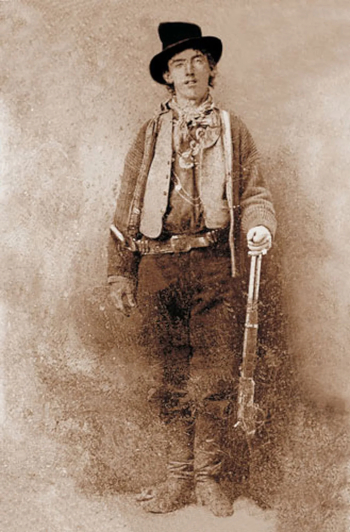
More than a century after his death, his story has become a mixture of history and legend: the young outlaw with a revolver, the daring escapes, the gunfights, Sheriff Pat Garrett, and the final confrontation in a darkened room at Fort Sumner.
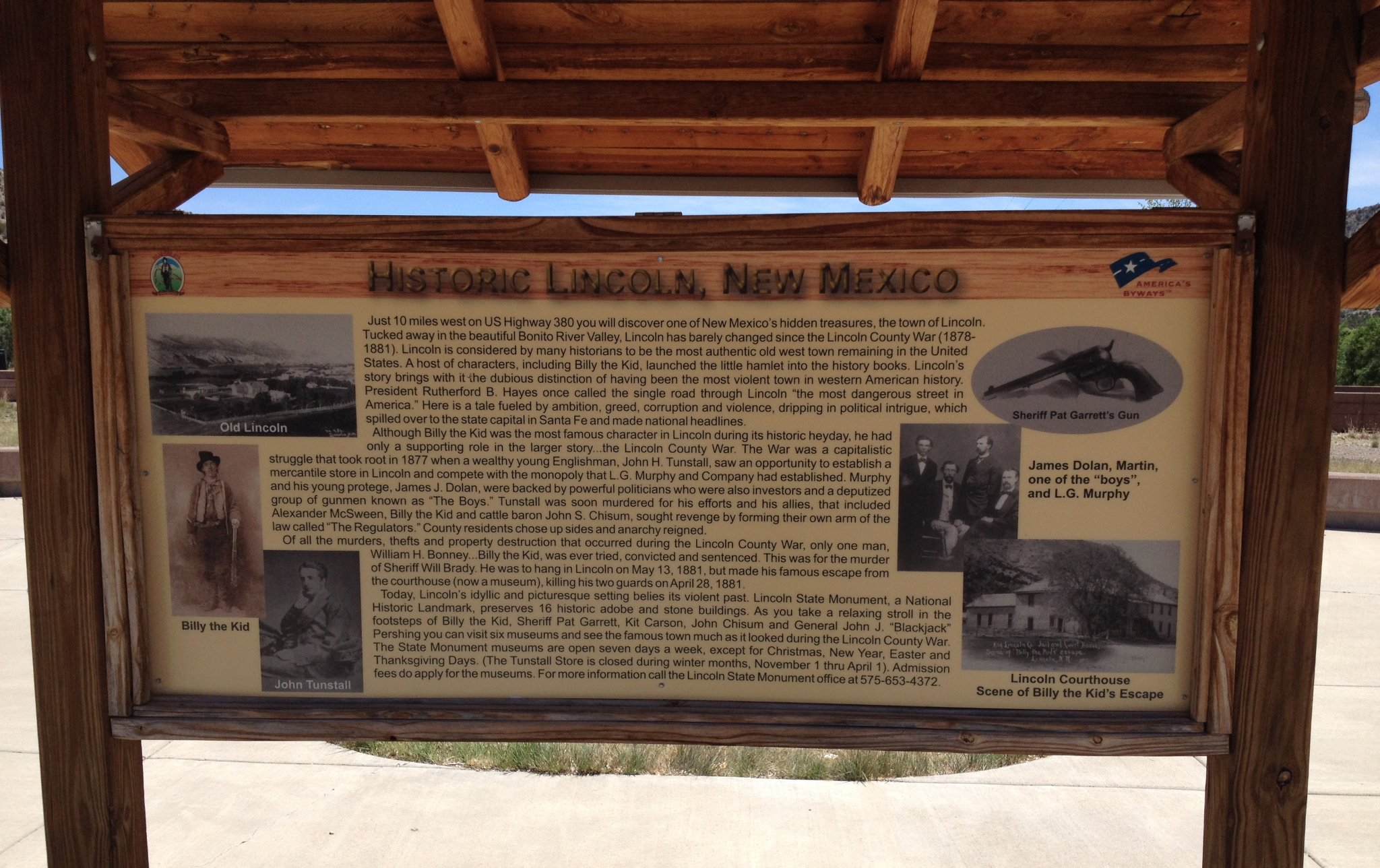
But if you travel to Lincoln, New Mexico, another story begins to emerge.
Billy the Kid wasn't the reason the Lincoln County War began.
He was one of the young men pulled into it.
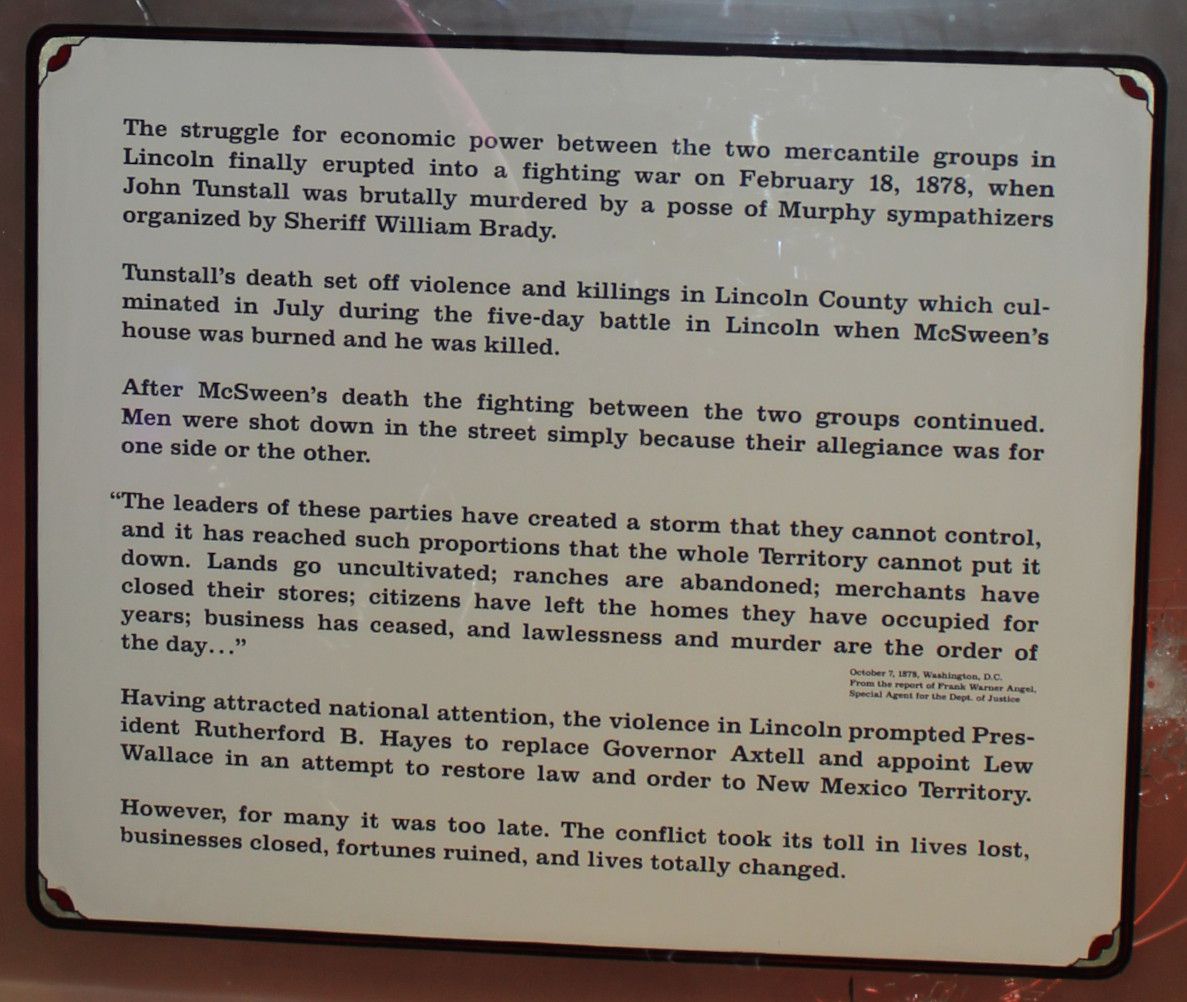
The real story involved merchants and cattlemen, lawyers and sheriffs, government contracts and political connections. At its center were two competing business factions struggling for economic and political control of Lincoln County.
On one side stood the established interests of Lawrence Murphy and James Dolan.
On the other were John Tunstall, Alexander McSween, and cattleman John Chisum.
Caught between them were ranch hands, merchants, Hispanic residents, lawmen, soldiers, families—and a young cowboy who called himself William H. Bonney.
History remembers him as Billy the Kid.
To understand Billy, however, you first have to understand Lincoln.
A Town Called Lincoln
Lincoln today is remarkably quiet.
Highway 380 follows the Rio Bonito through a narrow valley surrounded by the mountains and high desert of southeastern New Mexico.
There isn't a sprawling modern city surrounding the historic district.
That is part of what makes the place unusual.
Many of the buildings connected with the Lincoln County War still stand along the same road where the opposing factions confronted one another in 1878.
But Lincoln existed long before Billy the Kid arrived.
Indigenous peoples had lived in the region for generations. Hispanic settlers from northern New Mexico established a community here in the 1850s known as La Placita del Rio Bonito—the place by the pretty river.
The community eventually became the county seat and was renamed Lincoln in 1869 in honor of President Abraham Lincoln.
By the 1870s, it had also become the center of an increasingly valuable frontier economy.
And whoever controlled that economy wielded enormous power.
The House
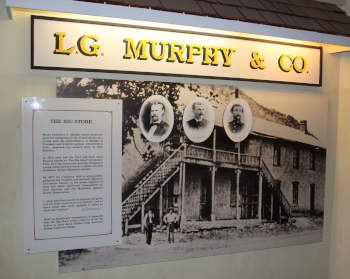
Before Billy the Kid became part of Lincoln's story, one business dominated much of the county's commerce.
Lawrence Murphy and his associates operated a mercantile enterprise commonly known as "The House."
The company sold supplies, extended credit, bought livestock, and competed for lucrative government contracts to provide goods and beef to nearby Fort Stanton and the Mescalero Apache reservation.
In a remote frontier county, control over credit and supplies meant far more than owning a successful store.
It meant influence.
Farmers and ranchers could become indebted to the company.
Government contracts could determine whose cattle were purchased.
Business relationships overlapped with local politics and law enforcement.
Murphy's health eventually declined, and James Dolan, who had worked for him, became increasingly important in the operation.
For years, their organization held a commanding position in Lincoln County.
Then a young Englishman arrived.
John Tunstall Comes to Lincoln
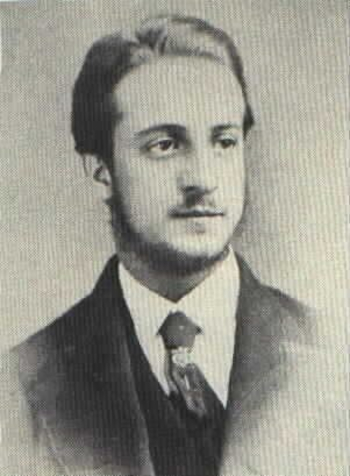
John Henry Tunstall was born in England and came to New Mexico with ambitions of building his own business empire.
He was young, well financed, and willing to challenge the established order.
Tunstall partnered with Lincoln attorney Alexander McSween and aligned himself with powerful cattleman John Chisum.
Together, their interests represented a direct challenge to Murphy and Dolan.
Tunstall opened a competing store in Lincoln.
He established ranching operations.
He and his partners sought a share of the government cattle and supply business.
Lincoln suddenly had two competing economic factions.
The rivalry wasn't simply about which store sold cheaper flour or coffee.
Money, cattle, credit, political influence, government contracts, and control of the county were all intertwined.
And both factions had armed men willing to protect their interests.
Among the cowboys working for Tunstall was a teenager known as William Bonney.
Before He Was Billy the Kid
The early life of Billy the Kid is filled with gaps, contradictory accounts, and later mythology.
He was probably born Henry McCarty in New York City around 1859.
His family eventually moved west, and his mother settled in New Mexico Territory. After her death in 1874, the teenager drifted increasingly toward trouble.
He used several names, including Henry McCarty, Henry Antrim, and eventually William H. Bonney.
By the time he entered Tunstall's orbit, he had already experienced theft, jail, escape, frontier work, and violence.
But the Billy who arrived in Lincoln County wasn't yet the legendary outlaw remembered today. He was a young ranch hand. Tunstall hired him. And that relationship would change his life.
February 18, 1878
The business dispute between the two factions eventually moved from lawsuits and threats toward armed confrontation.
A legal dispute led to attempts to seize property belonging to Tunstall.
On February 18, 1878, Tunstall was traveling through Lincoln County when he encountered an armed posse associated with Sheriff William Brady and the Murphy-Dolan faction.
Tunstall was shot and killed.
He was only 24 years old.
His death transformed the conflict.
Whatever possibility remained that the dispute could be contained in courtrooms and business offices largely disappeared.
To Tunstall's supporters, this wasn't simply the death of an employer.
They believed he had been murdered.
Some of his former employees wanted the men responsible brought to justice.
Billy the Kid was among them.
The Regulators
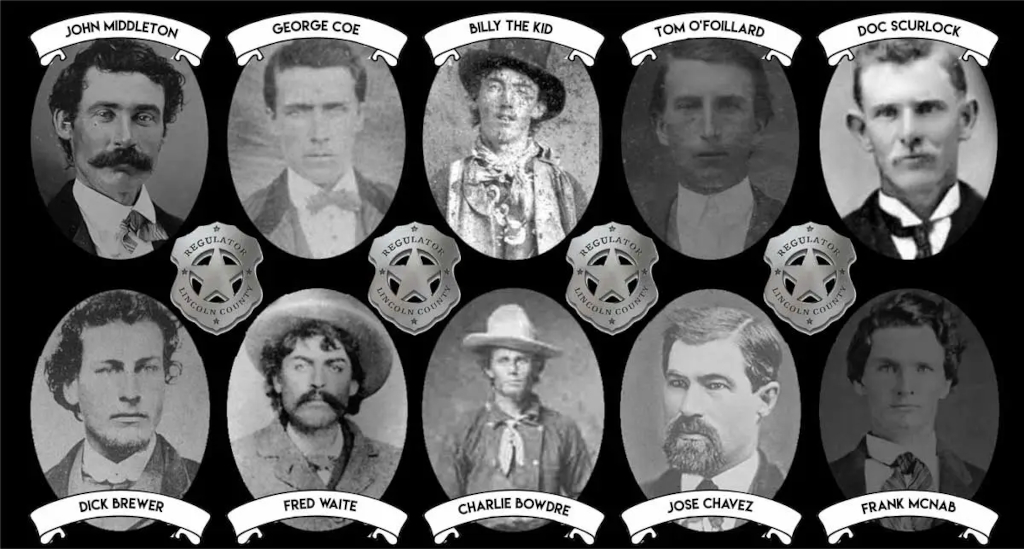
After Tunstall's death, warrants were issued for men accused of participating in his killing.
A group of Tunstall supporters became legally deputized to pursue them.
They became known as the Lincoln County Regulators.
The group included men such as:
- Dick Brewer
- Frank McNab
- Doc Scurlock
- George Coe
- Charlie Bowdre
- Tom O'Folliard
- Billy the Kid
For a brief period, the line separating lawman from outlaw became extraordinarily difficult to see.
The Regulators possessed legal authority to make arrests.
But Lincoln County's legal system itself was entangled with the opposing political and economic factions.
Attempts at arrest turned into shootings. Shootings led to retaliation. Retaliation produced more warrants. Before long, Lincoln County wasn't experiencing ordinary law enforcement. It was experiencing a blood feud.
Sheriff William Brady
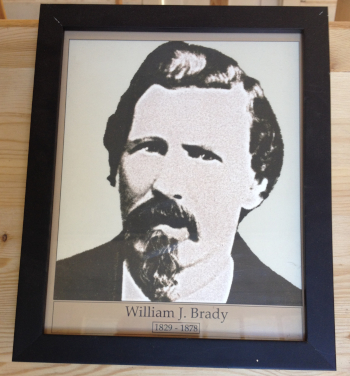
One of the most important figures in the conflict was Sheriff William Brady.
Brady was aligned with the Murphy-Dolan interests and had participated in efforts against Tunstall's property.
To the Regulators, he represented a legal system they believed was being used against them.
On April 1, 1878, Billy the Kid and other Regulators ambushed Brady and his deputies on Lincoln's main street.
Brady and Deputy George Hindman were killed.
It was one of the defining moments of the Lincoln County War.
Billy's involvement in Brady's killing would follow him for the rest of his life.
Years later, it would be the murder for which he was convicted and sentenced to hang.
The killing also demonstrates one of the central contradictions of the Lincoln County War.
Men who had initially been deputized to enforce warrants were now killing the county sheriff.
Law and vengeance had become almost impossible to separate.
Blazer's Mill
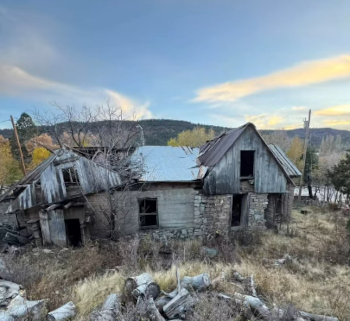
Only days after Brady's death, another confrontation demonstrated just how violent the feud had become.
At Blazer's Mill, the Regulators encountered Andrew "Buckshot" Roberts, a man associated with their opponents.
A gunfight erupted.
Roberts was badly wounded but managed to hold off multiple Regulators.
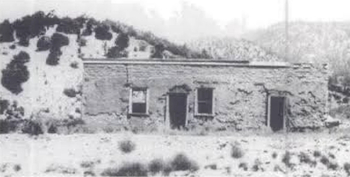
Regulator leader Dick Brewer was killed.
Roberts died from his wounds soon afterward.
The confrontation became another legendary episode of the Lincoln County War, but beneath the mythology was a grim reality.
Men on both sides were dying. And every death created another reason for revenge.
Alexander McSween
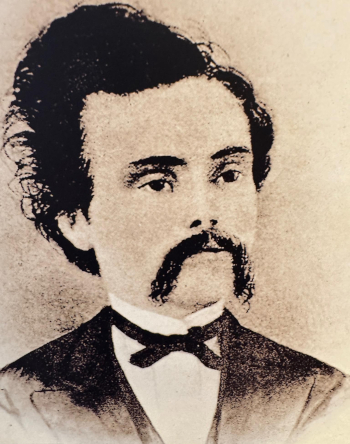
If Tunstall's death ignited the war, Alexander McSween became the central figure around whom his faction rallied.
McSween was a lawyer rather than a gunfighter.
He had been involved in the financial and legal disputes that helped create the conflict and had become Tunstall's business partner.
After Tunstall's death, the rivalry increasingly centered on McSween.
By the summer of 1878, Lincoln had become an armed camp.
McSween's supporters occupied positions around town.
The opposing faction, now supported by Sheriff George Peppin, controlled others.
Men watched one another from adobe buildings separated by a road that visitors can still walk today.
Then, in July, the conflict exploded.
The Five-Day Battle
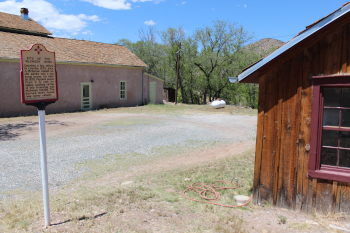
Beginning in mid-July 1878, the opposing factions fought what became known as the Five-Day Battle of Lincoln.
McSween and a number of supporters barricaded themselves inside his home.
Billy the Kid was among them.
Other McSween supporters occupied additional buildings.
Their opponents controlled positions elsewhere in town.
Gunfire crossed Lincoln's main street.
Families and residents were caught inside a community that had effectively become a battlefield.
The conflict eventually drew soldiers from nearby Fort Stanton into Lincoln.
Their presence remains controversial because military involvement altered the balance of the confrontation.
The opposing faction eventually managed to set the McSween house on fire.
Flames spread through the building while the men inside remained surrounded.
As darkness approached, they attempted to escape.
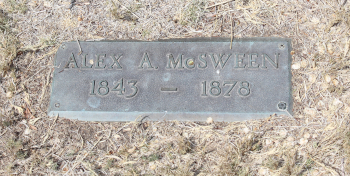
Billy the Kid was among those who made it out alive.
Alexander McSween was not.
He was killed during the final confrontation.
His burning home marked the violent climax of the Lincoln County War.
Susan McSween
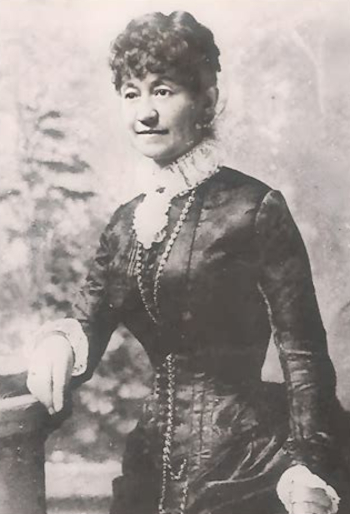
The story of Lincoln shouldn't end with Alexander McSween.
His wife, Susan McSween, survived the war.
Like many women in histories of the Old West, her story can disappear behind accounts of gunfighters and outlaws.
But Susan went on to build a life after the destruction of her home and the killing of her husband.
She eventually became a successful cattle operator in New Mexico and acquired a reputation of her own in the region's ranching history.
Her story is an important reminder that the Lincoln County War wasn't populated only by armed men.
Families lived here.
Businesses operated here.
People lost homes, livelihoods, friends, and relatives.
When the gunfire ended, those who survived still had to rebuild their lives.
Billy the Kid After the War
The death of McSween largely broke the organized resistance of his faction, but Billy the Kid's story was far from over.
He continued moving through New Mexico, sometimes rustling cattle and horses and sometimes staying with friends who were willing to shelter him.
By this point, newspapers were helping transform the young fugitive into a frontier celebrity.
But Billy also sought a way out.
New Mexico's territorial governor, former Civil War general and author Lew Wallace, attempted to restore order to a territory embarrassed by the violence.
Billy and Wallace eventually reached an arrangement connected with Billy's testimony in another murder case.
Billy expected leniency.
The promised resolution never developed the way he hoped.
He returned to life as a fugitive.
Pat Garrett
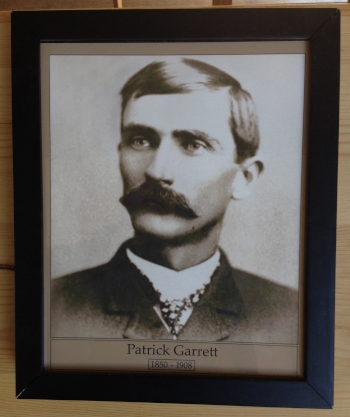
Eventually another famous name entered the story.
Pat Garrett became sheriff of Lincoln County in 1880.
He pursued Billy and eventually captured him near Stinking Springs.
Billy was taken to trial for the killing of Sheriff Brady.
He was convicted.
The sentence was death by hanging.
And the place where he was held while awaiting execution was a building already connected with the opposing side of the Lincoln County War.
The former Murphy-Dolan store—The House—had become the Lincoln County Courthouse.
Billy the Kid was now imprisoned inside the building that had once served as the headquarters of his enemies.
History could hardly have designed a more appropriate setting.
The Last Escape
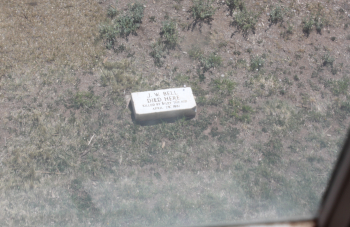
On April 28, 1881, Billy the Kid escaped from the Lincoln County Courthouse.
Two deputies guarding him—James Bell and Robert Olinger—were killed during the escape.
The exact sequence by which Billy first obtained a weapon has been debated, but the outcome isn't.
Billy escaped from the courthouse where he had been waiting to hang.
He rode away from Lincoln.
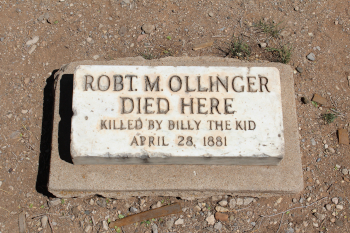
The escape became one of the most famous episodes in his legend.
Today, visitors can stand inside the same courthouse and look at the place where one of the Old West's most famous jailbreaks unfolded.
Unlike so many Western stories reconstructed on movie sets, this one happened here.
Fort Sumner
Billy's freedom lasted less than three months.
Sheriff Pat Garrett continued searching for him.
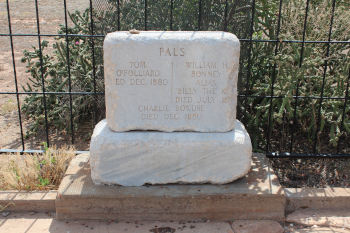
On the night of July 14, 1881, Garrett was at the home of rancher Pete Maxwell at Fort Sumner when Billy unexpectedly entered the darkened room.
According to the traditional account, Billy realized someone else was present and asked in Spanish:
"¿Quién es?" - Who is it?
Garrett recognized his voice and fired.
Billy the Kid was killed. (Maybe... Yes, I'm thinking John Miller)
He was about 21 years old. His short life was over, but his legend was just beginning.
The Billy the Kid Problem
Separating Billy the Kid from his legend is difficult.
Stories about him began spreading during his lifetime and multiplied after his death.
Depending on the storyteller, Billy became a cold-blooded killer, a charming outlaw, a frontier Robin Hood, a victim of corruption, or a young man trapped by circumstances.
Reality is less convenient.
Billy participated in killings.
He stole livestock.
He escaped custody.
He killed two deputies during his final jailbreak.
But he also lived in a place where political influence, business competition, personal loyalty, law enforcement, and violence had become dangerously entangled.
The famous claim that Billy killed 21 men—one for every year of his life belongs more to legend than reliable history.
Understanding Billy doesn't require turning him into either a hero or a monster.
The more interesting story is how an orphaned teenager became caught in a conflict among some of the most powerful men in Lincoln County and emerged as its most famous participant.
Walk the Street Where It Happened
This is what makes Lincoln Historic Site different from simply reading about Billy the Kid.
Much of the setting remains.
The historic district stretches along the old main road through town.
You can walk between buildings associated with opposing sides of the conflict.
You can stand where men watched one another across the street.
You can enter buildings connected directly with the people whose names appear throughout the story.
Among the important places are:
The Tunstall Store
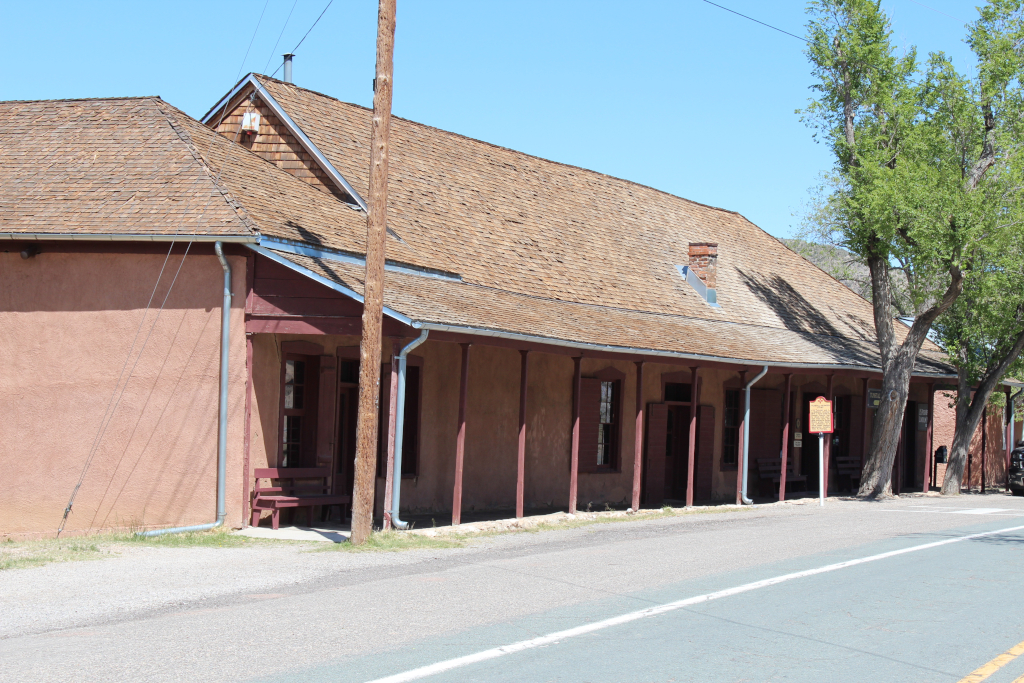
The Tunstall Store survives and contains original nineteenth-century merchandise displayed on original shelving and in original cases.
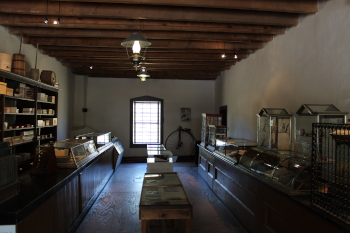
Standing inside makes John Tunstall seem less like a character from a Western and more like what he actually was:
A businessman attempting to establish himself in a competitive frontier town.
Old Lincoln County Courthouse
The building that began as the Murphy-Dolan store (known as "The House") was purchased by the county in 1880 and officially converted to serve as the Lincoln County Courthouse in 1881.
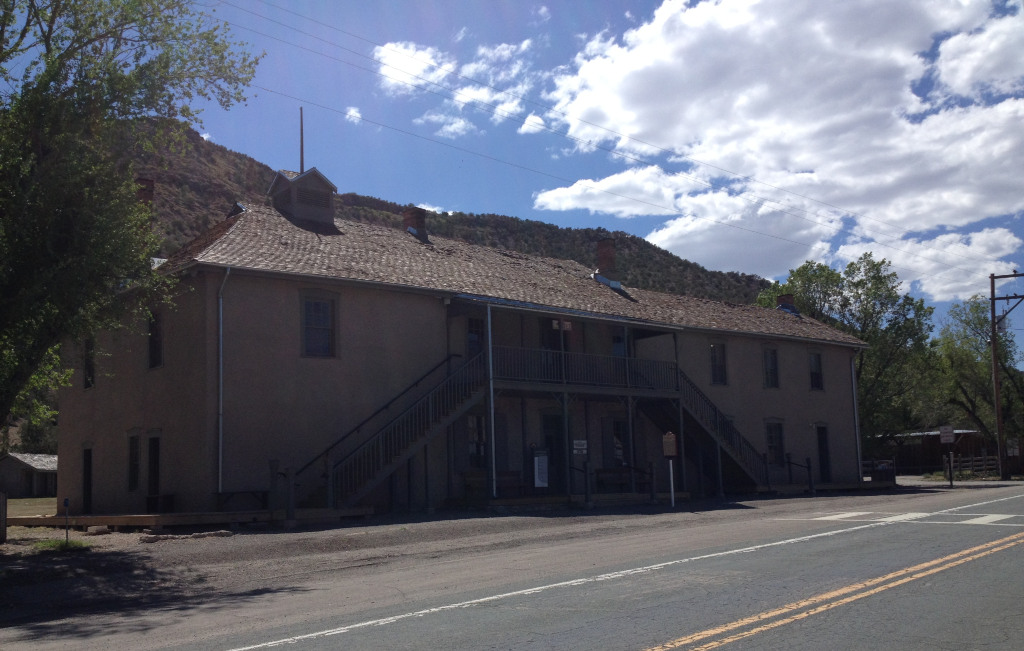
This is the building from which Billy the Kid escaped in 1881.
Few buildings in the American West connect so many different chapters of one story.
El Torreón
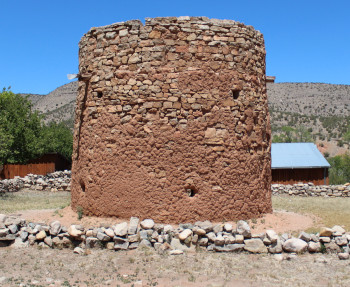
he first non-Native settlers arrived in the Rio Bonito Valley in the early 1850s, establishing La Placita del Rio Bonito, later renamed Lincoln. Among their earliest structures was El Torreón, a stone defensive tower originally surrounded by an eight-foot wall. Built to protect residents during Apache raids, the tower later served as a refuge during the Horrell War.
During the 1878 Lincoln County War, members of the Murphy-Dolan faction used its elevated position to fire on the McSween House during the five-day Battle of Lincoln.
San Juan Mission Church
The historic church provides another connection to the community that existed beyond the famous feud.
Montaño Store
The Montaño Store helps interpret Lincoln's Hispanic heritage and traditional adobe construction.
Anderson-Freeman Visitor Center
Start here if you can.
The exhibits provide the broader chronology needed to understand how the town, its people, and the Lincoln County War fit together.
More Than Billy the Kid
Billy the Kid is the reason many travelers first become interested in Lincoln.
But he shouldn't be the only reason to visit.
The Lincoln County War tells a much larger story about the American West.
It is a story about what happened when economic power and political power became intertwined.
It is about government contracts worth fighting over.
It is about businessmen attempting to build monopolies and competitors determined to break them.
It is about courts and sheriffs whose neutrality was questioned.
It is about immigrants arriving from England and Ireland, established Hispanic communities, cattle empires, soldiers, merchants, and cowboys occupying the same frontier.
And it is about what can happen when law stops being accepted as impartial.
Once that happened in Lincoln County, lawsuits became arrests.
Arrests became posses. Posses became gunfights. Gunfights became revenge. And revenge became war.
Don't Just Drive Through Lincoln
Lincoln isn't a place I would recommend treating as another roadside photo stop.
Park your vehicle and walk...
The distance between many of the historic buildings is small enough that the geography of the conflict begins making sense on foot.
Look down the road from the courthouse.
Walk toward the Tunstall Store.
Stop at the Torreón.
Imagine armed men occupying buildings on opposite sides of the street.
Think about civilians trying to live between them.
Then remember that Billy the Kid wasn't walking through a reconstructed Western town.
This was his world.
The courthouse was a store and the Tunstall Store was a competitor.
The people whose photographs now hang on museum walls were alive, armed, angry, frightened, ambitious, and making decisions whose consequences they couldn't know.
That may be the most interesting thing about Lincoln.
The legend of Billy the Kid followed him long after he left.
But in Lincoln, you can still walk through the place where the legend began.
Traveling Lens
Want the full-resolution original?
High-resolution photographs and video from our travels will be available for licensed download from Traveling Lens.
Keep Exploring
Related Stories
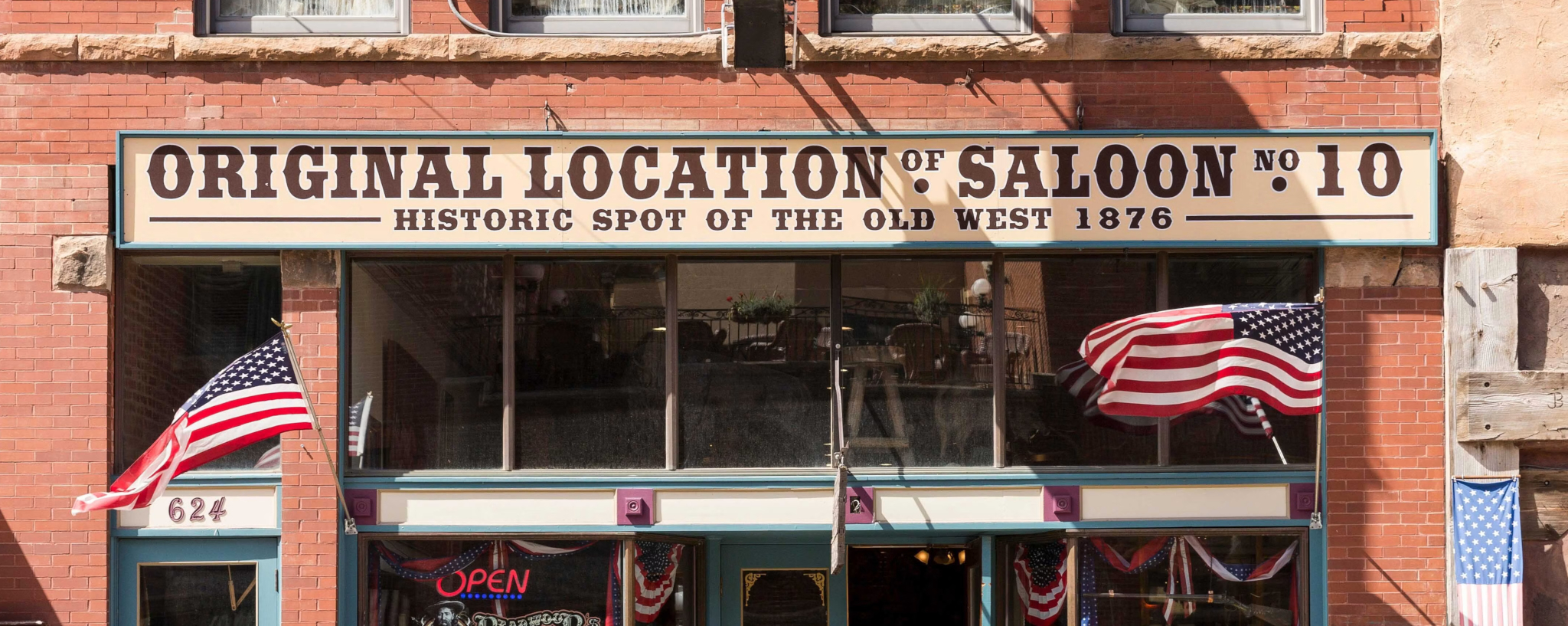
Saloon No. 10: Following Wild Bill's Final Hand Through Deadwood
Saloon No. 10 is inseparable from the story of Wild Bill Hickok, but Deadwood's history comes with an important twist: the modern …
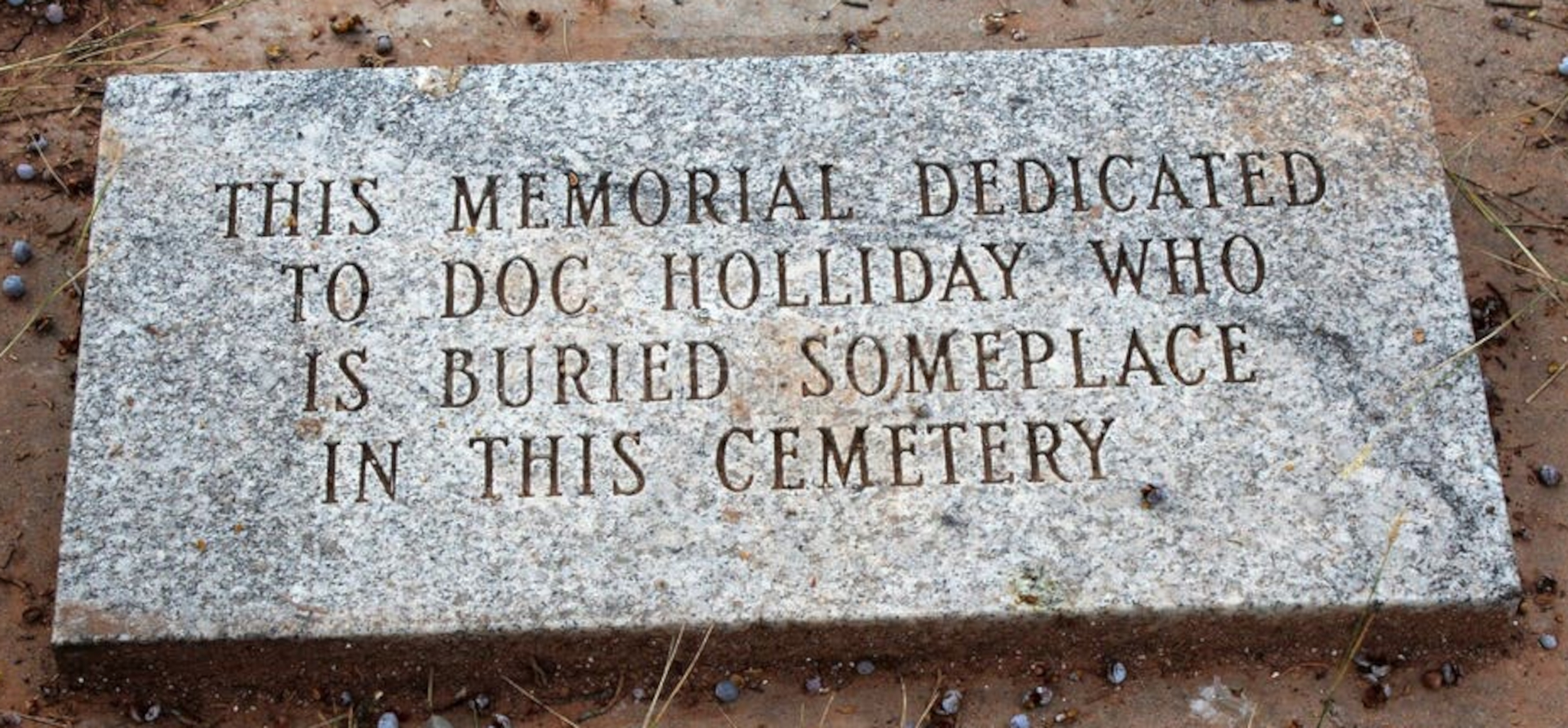
Doc Holliday: His Long Road to Glenwood Springs
Follow Doc Holliday’s journey from a young Georgia dentist to gambler, gunfighter, and Old West legend. After years of wandering through frontier …