Colorado · Glenwood Springs, CO
Doc Holliday: His Long Road to Glenwood Springs
Follow Doc Holliday’s journey from a young Georgia dentist to gambler, gunfighter, and Old West legend. After years of wandering through frontier towns and surviving the violence of Tombstone, his battle with tuberculosis ultimately brought him to Glenwood Springs, Colorado, where his remarkable story came to an end in 1887.
Doc Holliday: His Long Road to Glenwood Springs
Few names are as closely tied to the legends of the American West as John Henry "Doc" Holliday. Dentist, gambler, gunfighter, and friend of Wyatt Earp, Holliday spent much of his short adult life moving between frontier towns while fighting an enemy he couldn't outrun—tuberculosis.
His travels carried him from Georgia across the West, through the gambling halls and mining towns of Colorado, into the violence of Tombstone, and eventually back to the Colorado mountains.
His journey finally ended in Glenwood Springs in 1887, when Holliday was only 36 years old.
A Dentist Heads West
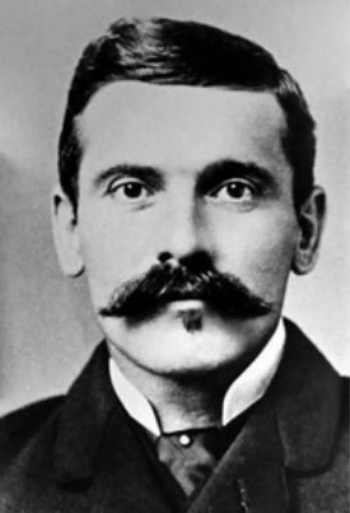
John Henry Holliday was born in Griffin, Georgia, on August 14, 1851. He studied dentistry at the Pennsylvania College of Dental Surgery and graduated in 1872.
A respectable professional career seemed to be ahead of him.
Then Holliday developed tuberculosis, the disease that had also claimed his mother's life.
In an era before antibiotics, there was no effective cure. The dry climate of the American West was often recommended to tuberculosis patients, and in 1873 Holliday headed west.
He initially settled in Dallas, Texas, where he practiced dentistry. As his illness progressed, however, dentistry became increasingly difficult. Gambling offered another way to make a living.
The dentist gradually became better known at the card table than in the dental chair.
A Life on the Move
Holliday spent much of the next several years moving among the rapidly growing towns of the West.
He became particularly skilled at faro, one of the most popular gambling games of the era.
His travels eventually brought him into contact with Wyatt Earp, beginning the friendship that would define much of Holliday's later reputation.
Colorado also became an important part of his life.
Holliday arrived in Colorado in 1879, spending time in Pueblo and Denver. Denver's Larimer Street was then filled with saloons and gambling establishments, and Holliday found work dealing faro while also continuing, at least occasionally, to practice dentistry.
But another booming frontier town would soon pull him south.
Tombstone and the O.K. Corral
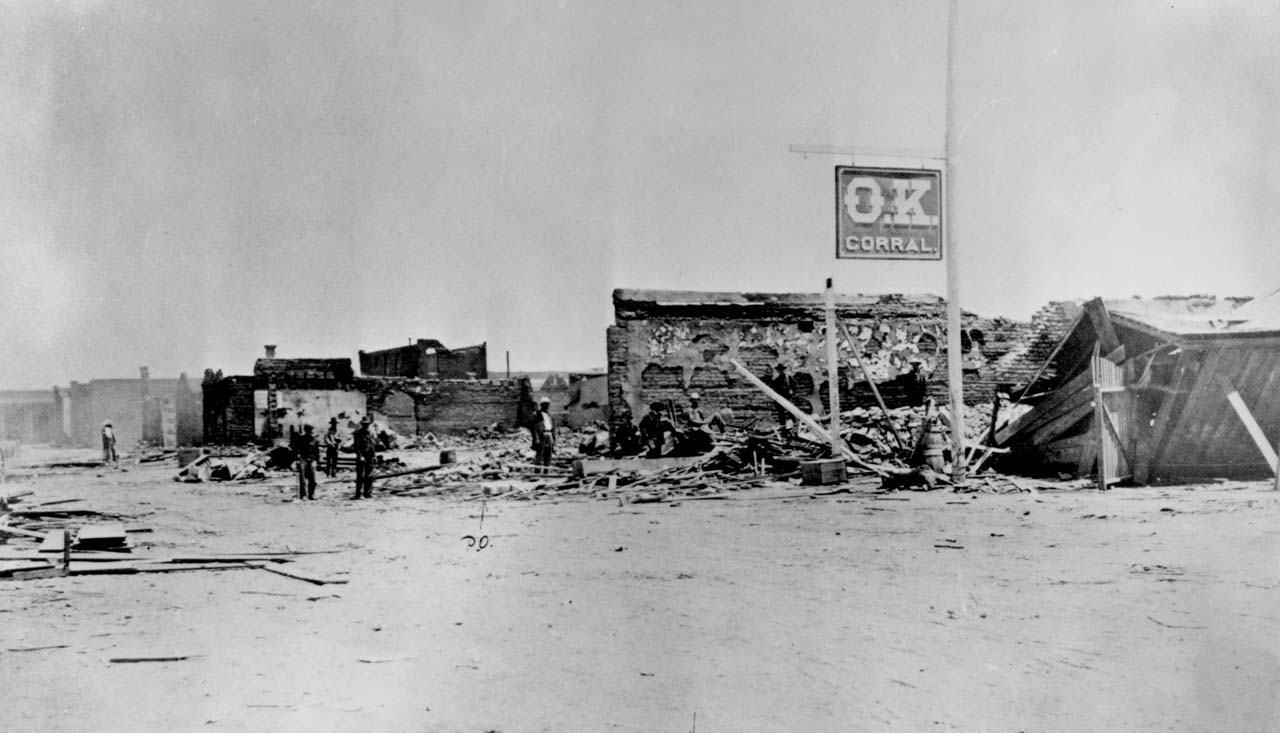
In 1880, Holliday followed Wyatt Earp to Tombstone, Arizona Territory.
The silver boom had transformed Tombstone into a crowded frontier town filled with miners, merchants, gamblers, saloons, lawmen, and men operating on the other side of the law.
Tensions between the Earp brothers and a group commonly known as the Cowboys eventually erupted on October 26, 1881.
Holliday joined Wyatt, Virgil, and Morgan Earp in the confrontation remembered as the Gunfight at the O.K. Corral.
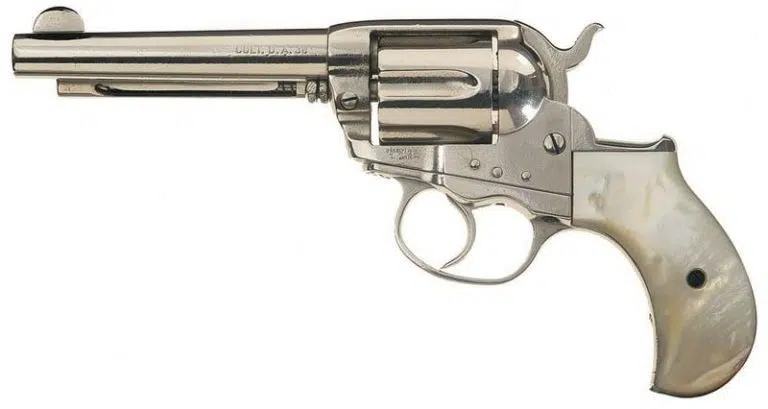
The shooting lasted only about half a minute, but it permanently changed Holliday's place in American history.
Three men were killed. Virgil and Morgan Earp were wounded, and Holliday received a minor wound.
The violence surrounding Tombstone continued long after the gunfight ended.
Back to Colorado
After Morgan Earp was murdered in 1882, Holliday accompanied Wyatt during the violent events that followed (The Earp Vendetta Ride).
Eventually they left Arizona.
Holliday returned to Colorado, but Arizona authorities sought to have him extradited back to the territory. Colorado Governor Frederick Pitkin refused the extradition request, allowing Holliday to remain in Colorado.
He would spend the remainder of his life there.
Colorado wasn't merely the location of Holliday's final days. It represented a substantial chapter of his adult life.
Denver, Pueblo, Leadville, and eventually Glenwood Springs all became part of his story.
Gambling in Leadville
During much of the 1880s, Holliday lived in Leadville, one of Colorado's great silver-boom towns.
Sitting high in the Rocky Mountains, Leadville had exploded in population following the discovery of silver. Money flowed through its mines, hotels, saloons, theaters, and gambling halls.
It was exactly the kind of town where a professional gambler could make a living.
But Holliday's health continued to deteriorate.
The tuberculosis that had driven him west more than a decade earlier was becoming increasingly difficult to endure. The extreme elevation of Leadville—more than 10,000 feet above sea level—was especially challenging for a man whose lungs were already badly damaged.
By 1887, Holliday was running out of options.
The Road to Glenwood Springs
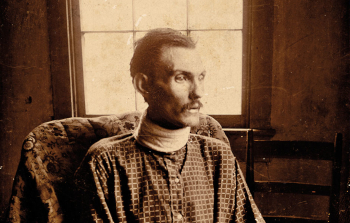
Holliday eventually traveled to Glenwood Springs, a young Colorado mountain community developing a reputation for its mineral hot springs and vapor caves.
He hoped the lower elevation and mineral waters might provide some relief from his illness.
For a man who had spent years moving from one frontier town to another, Glenwood Springs would become his final destination.
Holliday stayed at the Hotel Glenwood, a building that no longer exists. He reportedly visited the hot springs and vapor caves while his health steadily declined.
There would be no miraculous recovery.
By the autumn of 1887, tuberculosis had left him gravely ill.
The Death of Doc Holliday
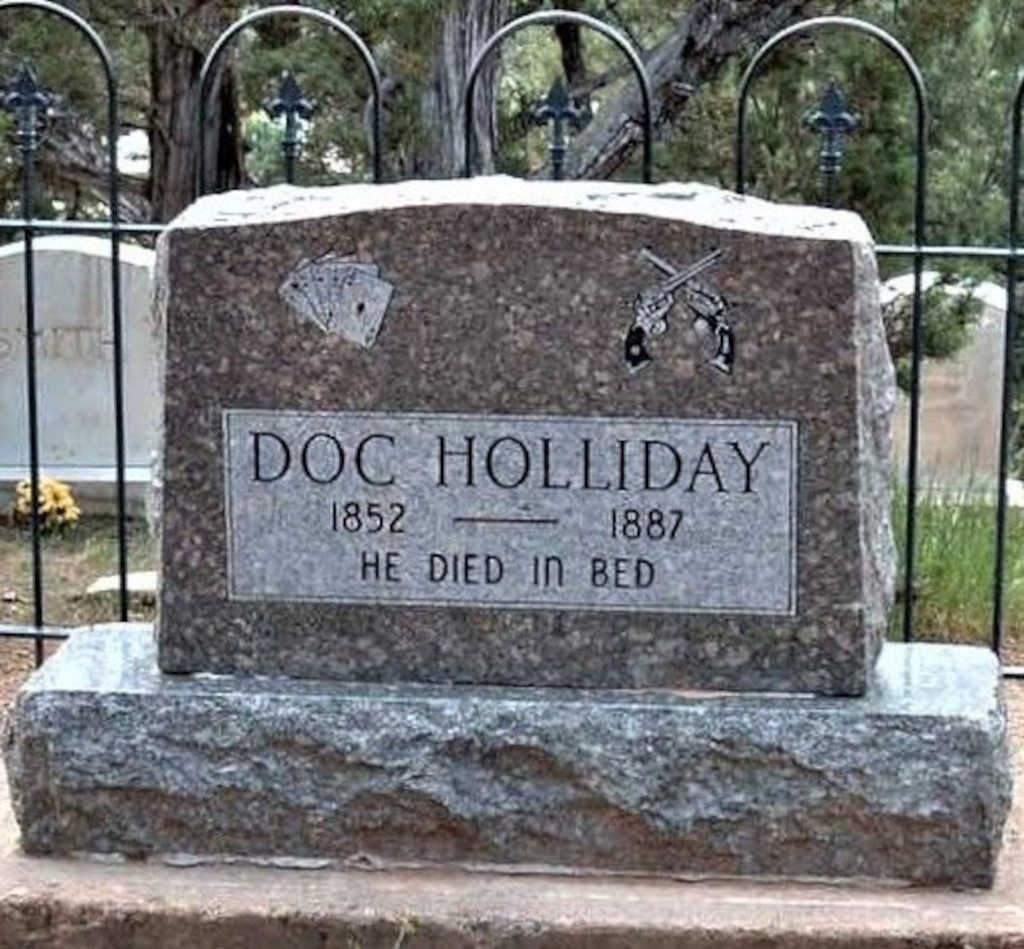
John Henry "Doc" Holliday died in Glenwood Springs on November 8, 1887.
He was just 36 years old.
Stories surrounding his death quickly became part of the Holliday legend. One frequently repeated account says that shortly before dying, Doc asked for a glass of whiskey, which he thoroughly enjoyed. Then, looking down at his bare feet, said “This is funny,” and died. According to the story, Holliday had always expected a violent death with his boots on—not to die barefoot in a hotel bed from tuberculosis.
Like many stories surrounding Old West figures, details of Holliday's final moments have been repeated and embellished over generations. What isn't disputed is that the gunfighter who survived Tombstone and years of frontier violence ultimately died from the disease that had sent him west in the first place.
Climbing to Doc Holliday's Grave
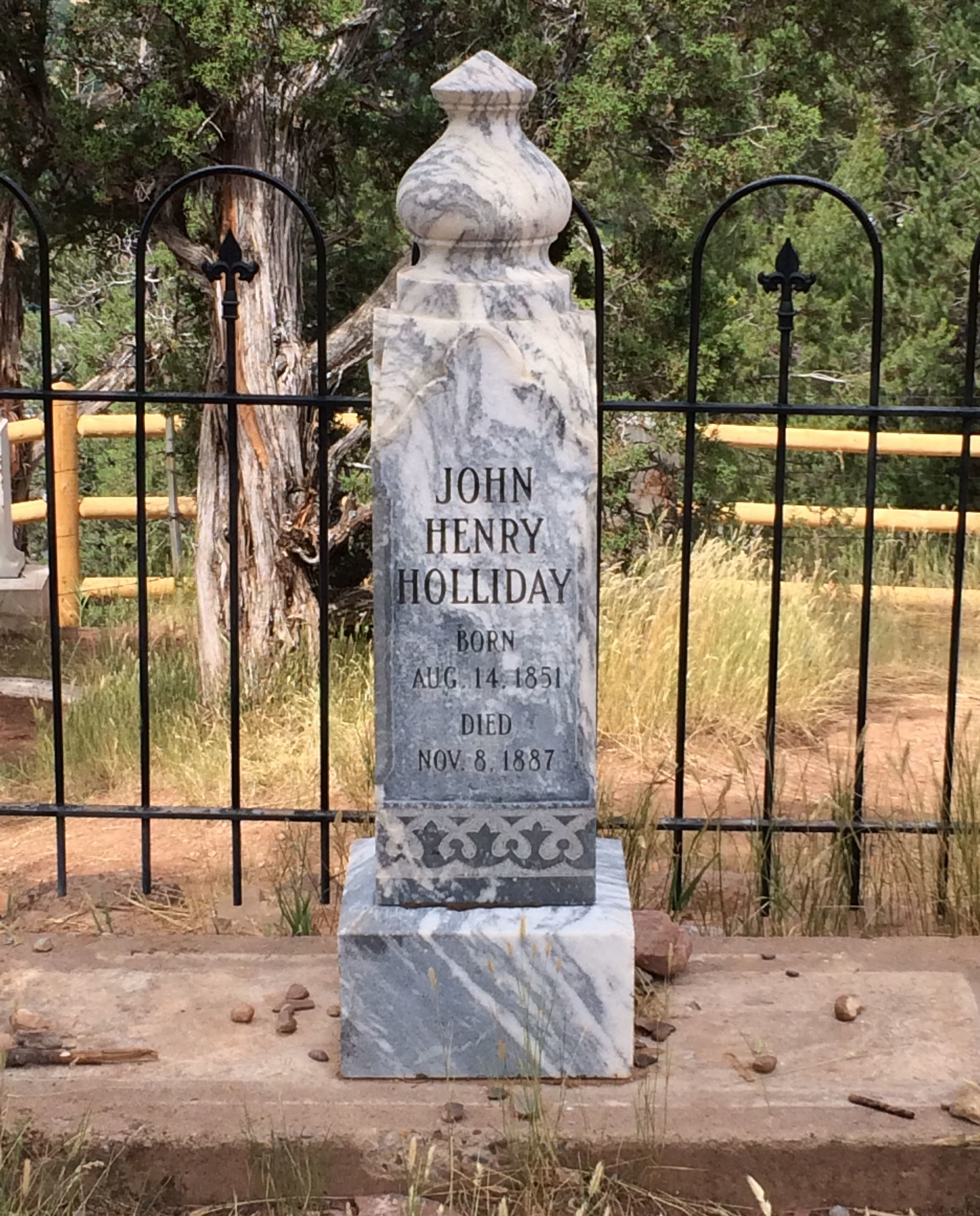
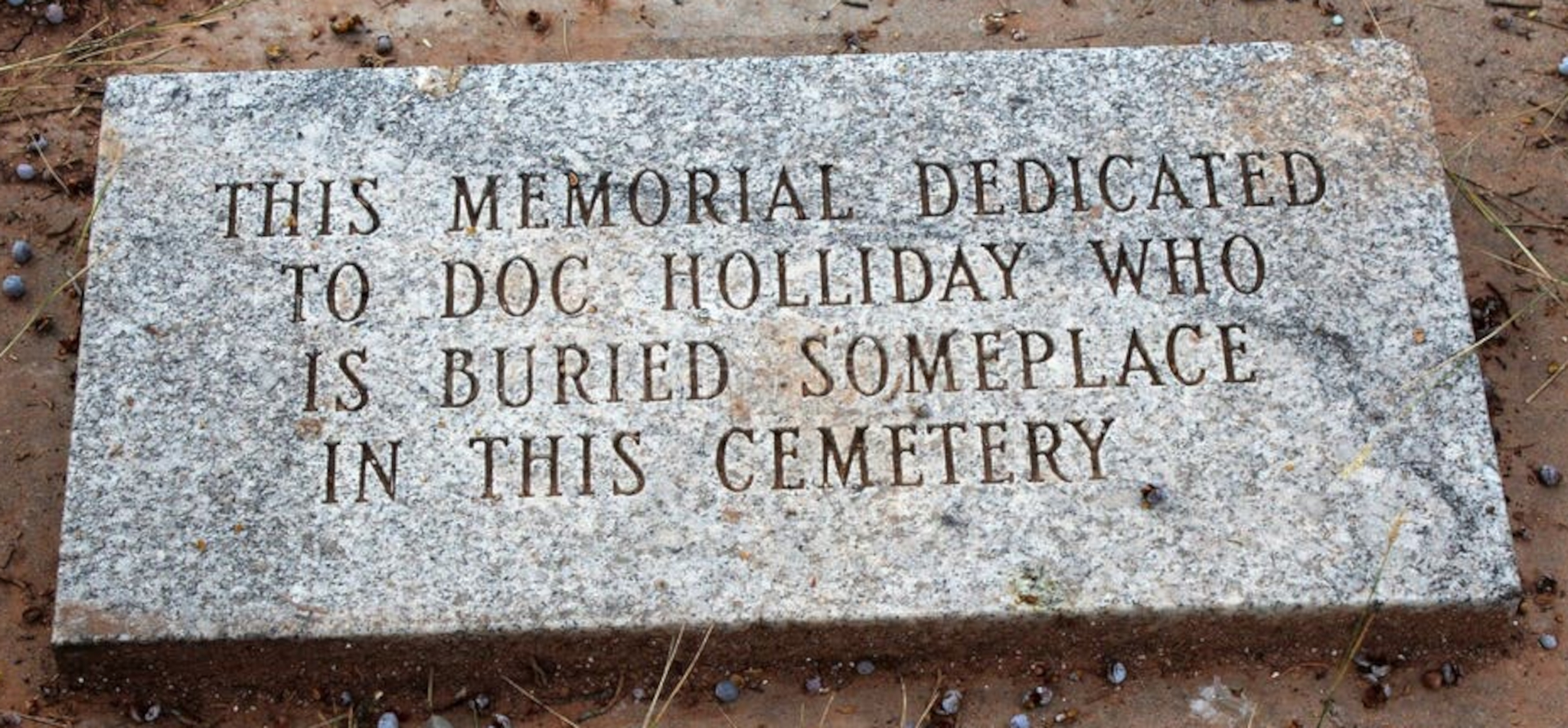
Holliday was buried in Linwood Cemetery, located on a hillside overlooking Glenwood Springs.
Today, visitors can follow the Doc Holliday Trail from town up to the cemetery.
A memorial marks Holliday's resting place, although the precise location of his remains within the cemetery is uncertain. Time, incomplete records, and changes to the cemetery have made it difficult to determine exactly where his original grave lies. Doc's grave marker has also been replaced several times, because of desecration by gunfire as well as fans chipping off pieces of the grave markers as mementos.
In some ways, the uncertainty fits the story.
The historical Doc Holliday and the legendary Doc Holliday have been intertwined for more than a century.
The End of a Long Journey
Holliday's life is usually remembered through Tombstone and the O.K. Corral, but focusing only on Arizona misses a large part of his story.
Colorado played an important role in the final eight years of his life.
He gambled in Denver, spent years among the mining camps and saloons of Leadville, survived an attempt to return him to Arizona, and finally traveled to Glenwood Springs searching for relief from the tuberculosis that had followed him across the West.
Today, visitors can walk through Glenwood Springs, climb the trail to Linwood Cemetery, and stand near the place where Holliday's wandering finally ended.
It's a surprisingly quiet ending for one of the most famous figures of the Old West.
Doc Holliday came west looking for a climate that might keep him alive. Instead, the journey turned a young Georgia dentist into an American legend.
Traveling Lens
Want the full-resolution original?
High-resolution photographs and video from our travels will be available for licensed download from Traveling Lens.
Keep Exploring
Related Stories
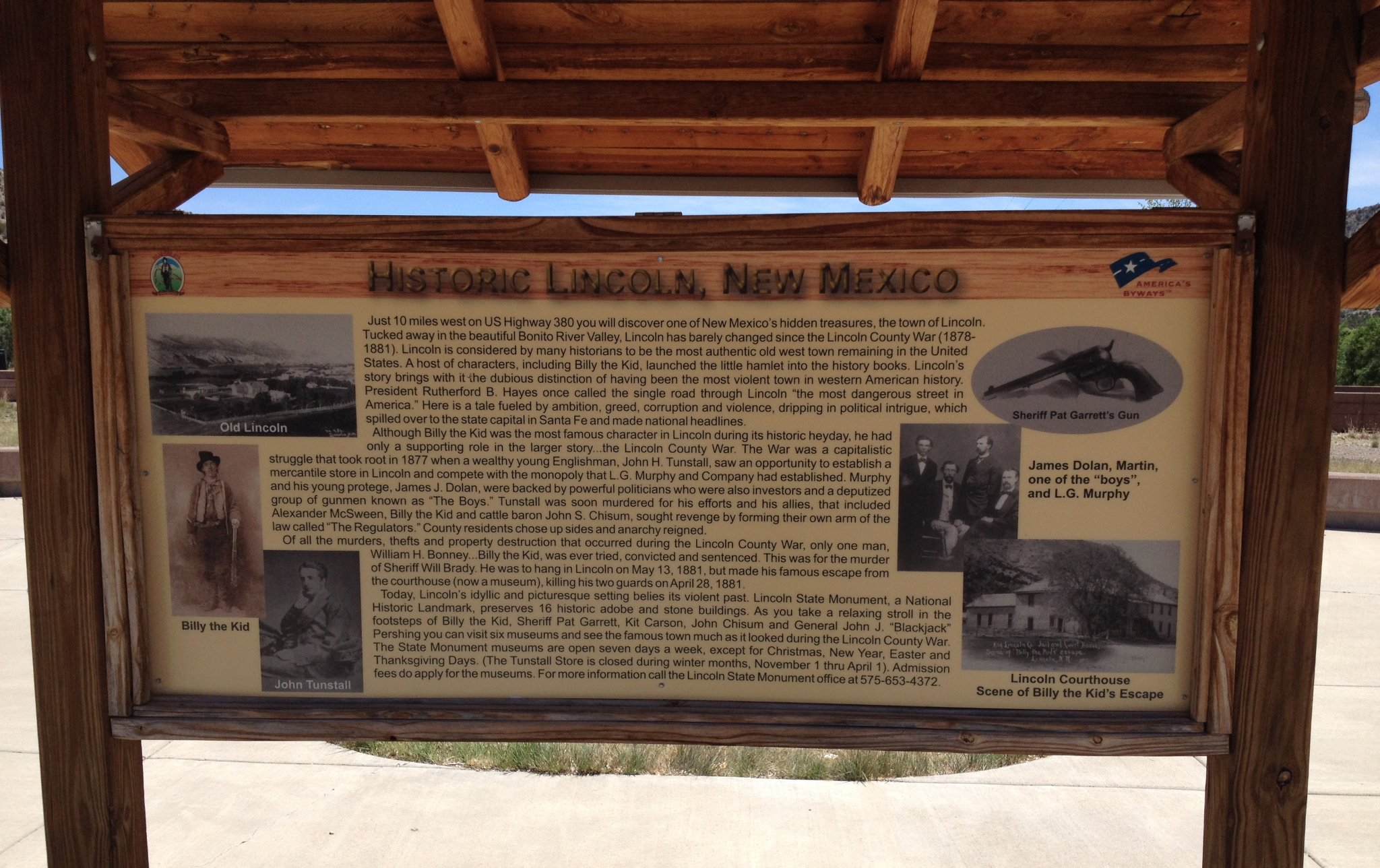
Billy the Kid and the Lincoln County War: When a New Mexico Town Went to War
The legend of Billy the Kid began amid a violent struggle for economic and political power in Lincoln County, New Mexico. Walk …
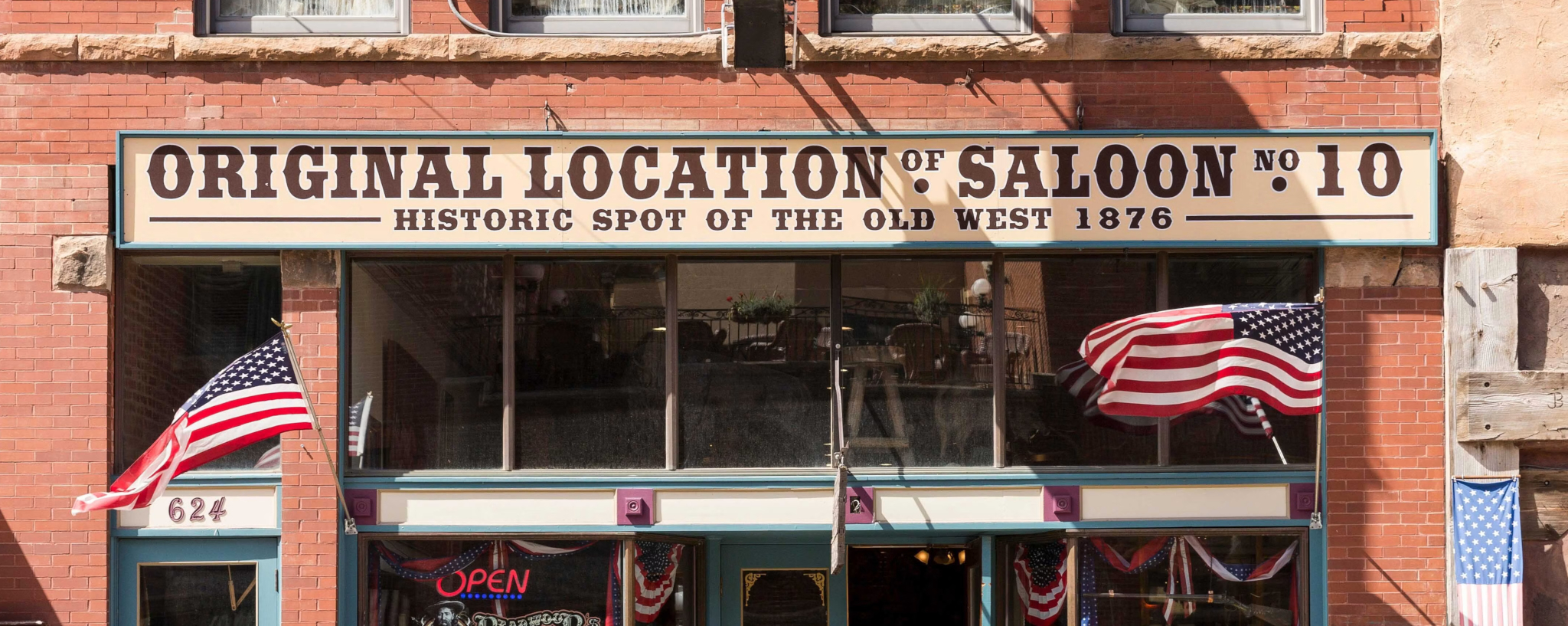
Saloon No. 10: Following Wild Bill's Final Hand Through Deadwood
Saloon No. 10 is inseparable from the story of Wild Bill Hickok, but Deadwood's history comes with an important twist: the modern …