Minnesota · North Shore, MN
Duluth's North Pier Lighthouse: Where Lake Superior Meets the Harbor
Walk Duluth's North Pier to discover a century-old lighthouse, watch Great Lakes freighters pass beneath the Aerial Lift Bridge, and explore the ship canal's history—including the tragic final voyage of the Edmund Fitzgerald from nearby Superior, Wisconsin.
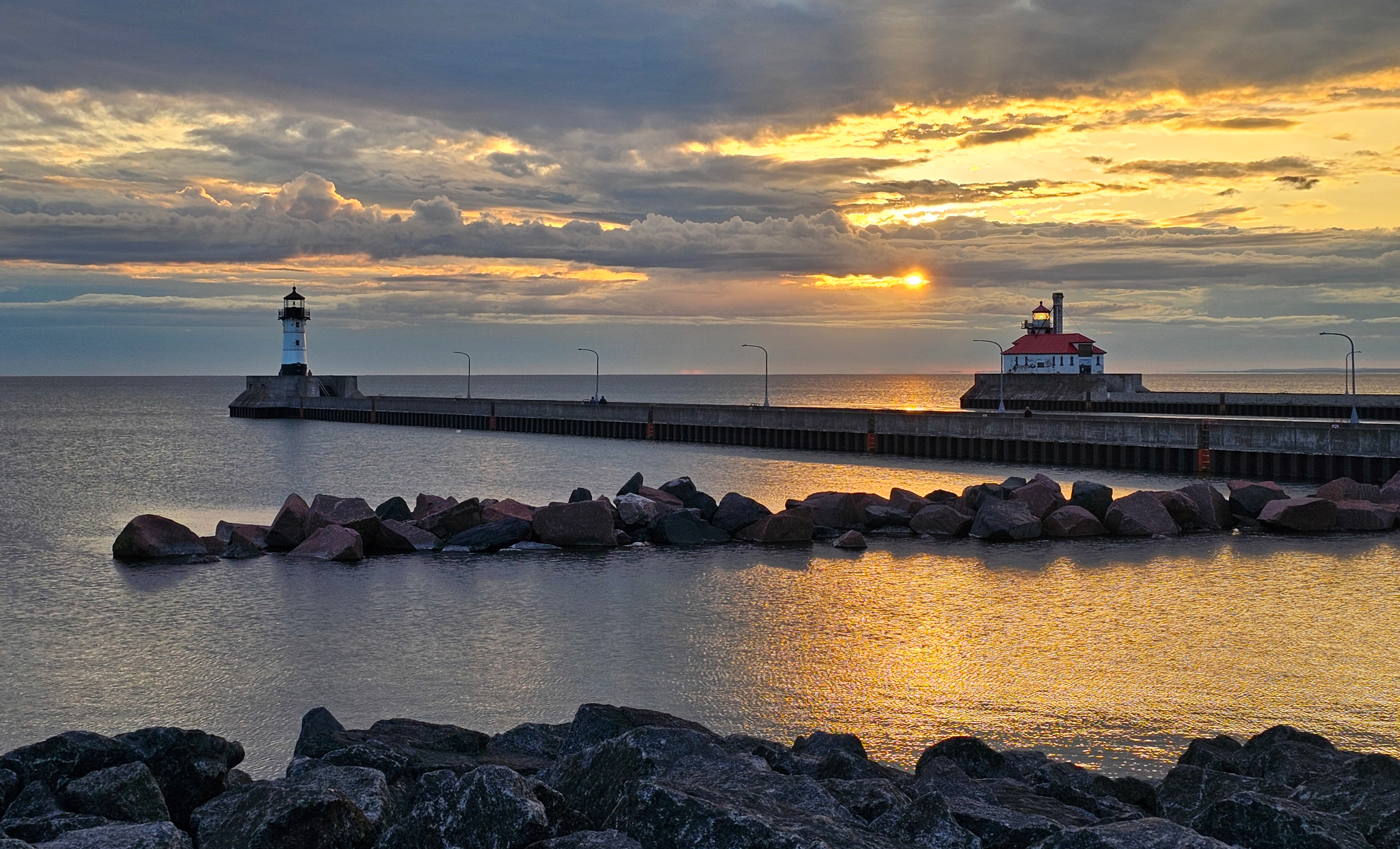
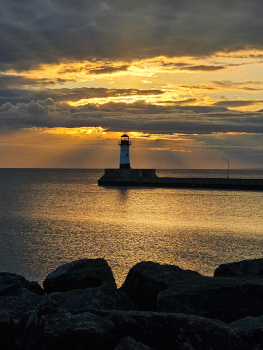
At the edge of Duluth's Canal Park, a narrow pier reaches out into Lake Superior. At its end stands a modest white lighthouse with a black lantern, dwarfed by the lake around it and, on a busy shipping day, by the enormous freighters passing nearby. The Duluth Harbor North Pier Light is easy to overlook beside the city's famous Aerial Lift Bridge. But the little tower tells a larger story about a hard-won harbor entrance, dangerous storms, and the generations of sailors who depended on a safe passage home.
You don't need to be a maritime historian to appreciate this place. Walk toward the lighthouse on a clear day, and you can hear waves breaking against the concrete, watch gulls ride the wind, and see a Great Lakes freighter emerge from the horizon. Look back toward the city, and the Aerial Lift Bridge frames one of the most recognizable waterfront scenes in Minnesota.
A Lighthouse Built for a Dangerous Entrance
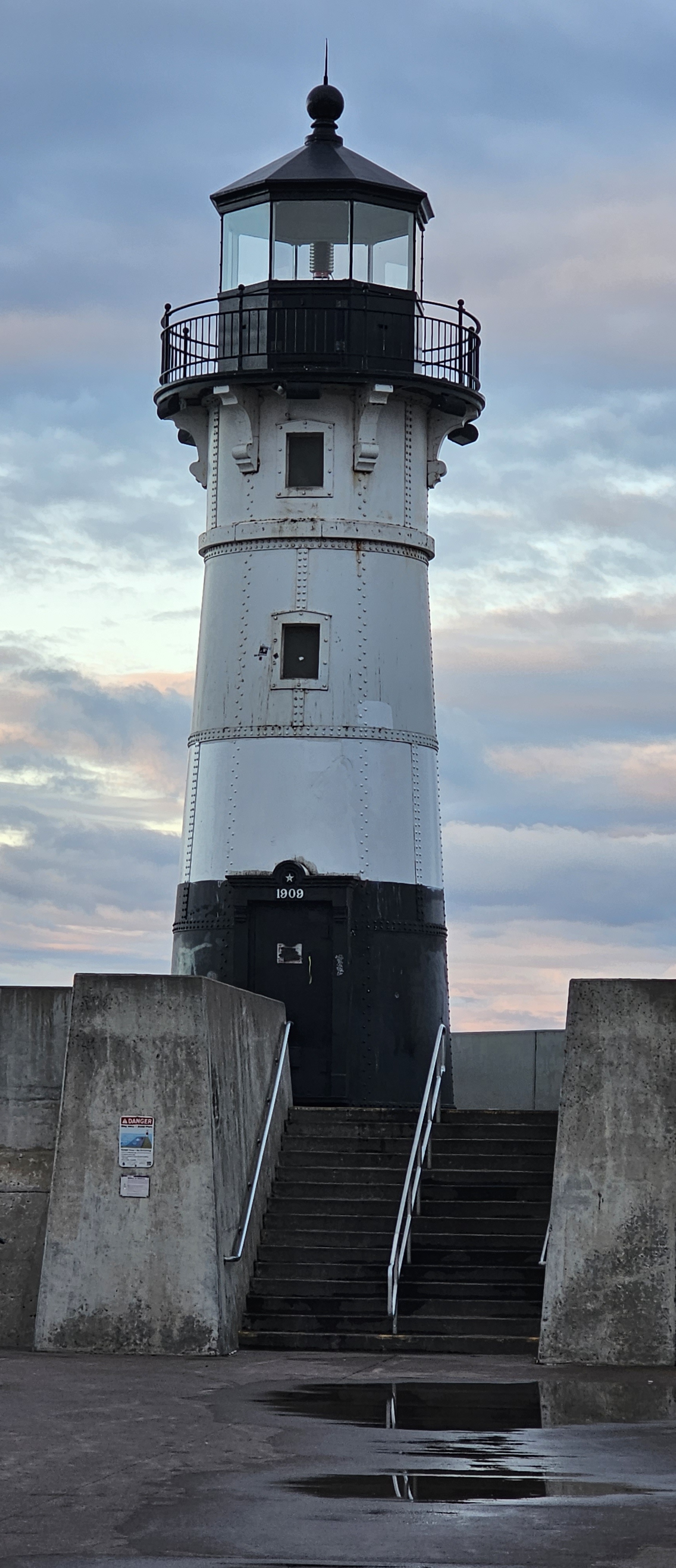
The Duluth Harbor North Pier Light was constructed in 1909–1910 and first illuminated in 1910. The cylindrical steel-and-cast-iron tower rises approximately 36 feet from its concrete pier. Its original fifth-order Fresnel lens helped guide vessels toward the entrance of the Duluth Ship Canal. Unlike a towering coastal lighthouse, this one was built for a precise job: marking one side of a busy, sometimes unforgiving harbor entrance.
The north pier had long needed a reliable navigational light. A temporary light was installed by the Lake Carriers' Association in 1908, and the permanent tower followed. The lighthouse is listed on the National Register of Historic Places, recognizing its role in Great Lakes maritime transportation and engineering.
The lighthouse remains an active aid to navigation. Its small size is deceptive; when the lake turns rough or visibility drops, knowing exactly where the canal entrance lies matters far more than how impressive a lighthouse looks from shore.
The Duluth Ship Canal: A Shortcut That Changed the Harbor
The lighthouse would not exist without the canal beneath it. Before the Duluth Ship Canal, vessels entering the sheltered waters of the Duluth–Superior harbor used the natural entrance near Wisconsin Point and Minnesota Point. For Duluth's growing waterfront, that meant a less direct route to the open lake.
In 1870, work began cutting a new channel through Minnesota Point. The canal opened in 1871, giving Duluth a direct connection between its harbor and Lake Superior. The project was controversial: neighboring Superior, Wisconsin, had its own interests in how ships reached the shared harbor. Local accounts remember the urgency of the work, including residents helping dig through stubborn material when mechanical equipment struggled.
The canal's first timber structures were vulnerable to ice and storms. Later improvements rebuilt its sides into the substantial piers seen today. The north and south piers protect and define the narrow entrance, but they also show how much engineering was required to make this stretch of shoreline usable for commercial shipping.
The canal cut across Minnesota Point, creating another problem: how would people cross to what is now Park Point? Duluth answered with the Aerial Ferry Bridge in 1905. Instead of the familiar roadway that rises today, the original bridge carried people and vehicles across on a suspended gondola. It was rebuilt into a vertical-lift roadway bridge in 1929–1930. Today, watching the bridge rise as a freighter approaches is one of Duluth's signature experiences.
The Best Seat in Duluth for Watching Ships
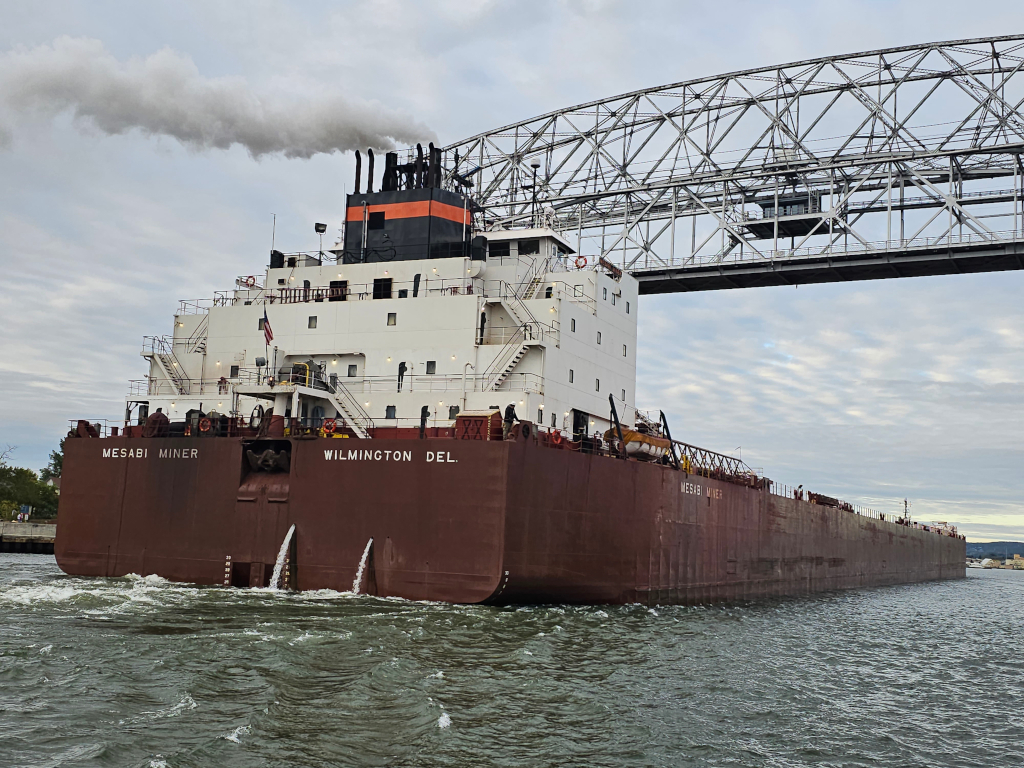
The North Pier offers a remarkable view of commercial shipping. Great Lakes freighters carry commodities such as iron ore pellets, grain, and other bulk cargo through the Duluth–Superior harbor system. From the waterfront, their scale is difficult to appreciate until one passes close by in the canal.
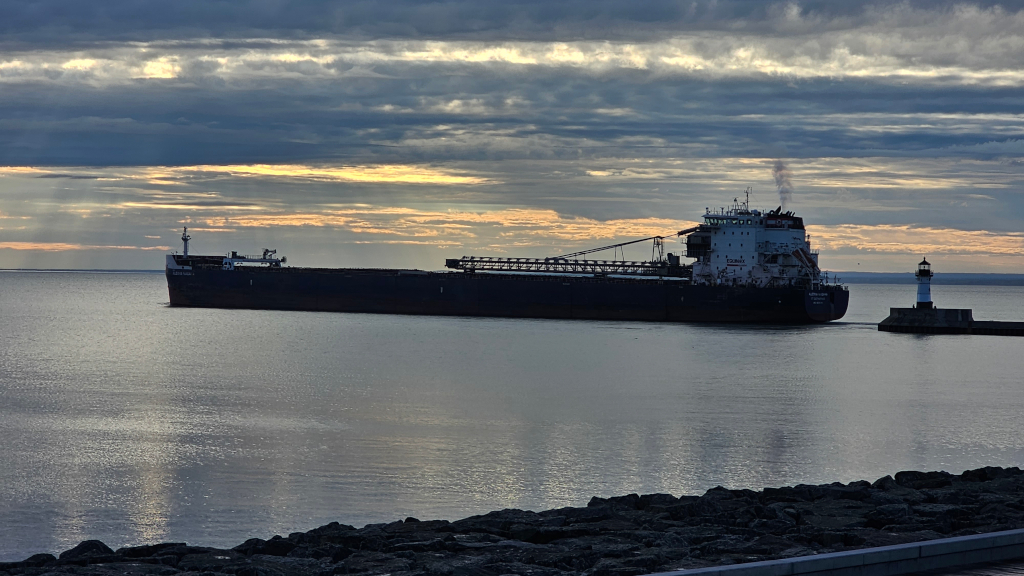
A ship's arrival becomes a small event. People gather along the water, the bridge prepares to lift, and the vessel slowly enters the narrow channel. Some ships seem almost to fill the opening between the piers. On a calm day, it is a memorable way to experience a working port rather than simply look at one from a distance.
The nearby Lake Superior Maritime Visitor Center is a worthwhile companion stop for anyone who wants more context about the harbor, vessels, and shipping history. Ship schedules can change with weather and port operations, so treat posted arrival times as estimates rather than guarantees.
Shipwrecks and the Lessons of Lake Superior
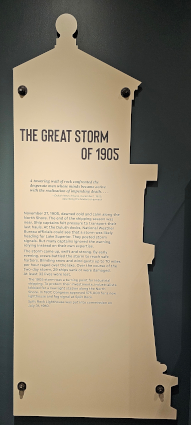
Lake Superior can look peaceful from the North Pier, but its storms have shaped the design of the canal and the lives of those who sailed it. One of the most significant local disasters was the wreck of the SS Mataafa during a violent November storm in 1905. The ship was driven onto the piers at the canal entrance, and lives were lost. The disaster underscored how treacherous the harbor approach could become and helped strengthen the case for improved navigational lighting, including the North Pier Light.
The best-known Lake Superior tragedy, however, happened far from the Duluth lighthouse itself.
The Edmund Fitzgerald: A Final Departure from Superior
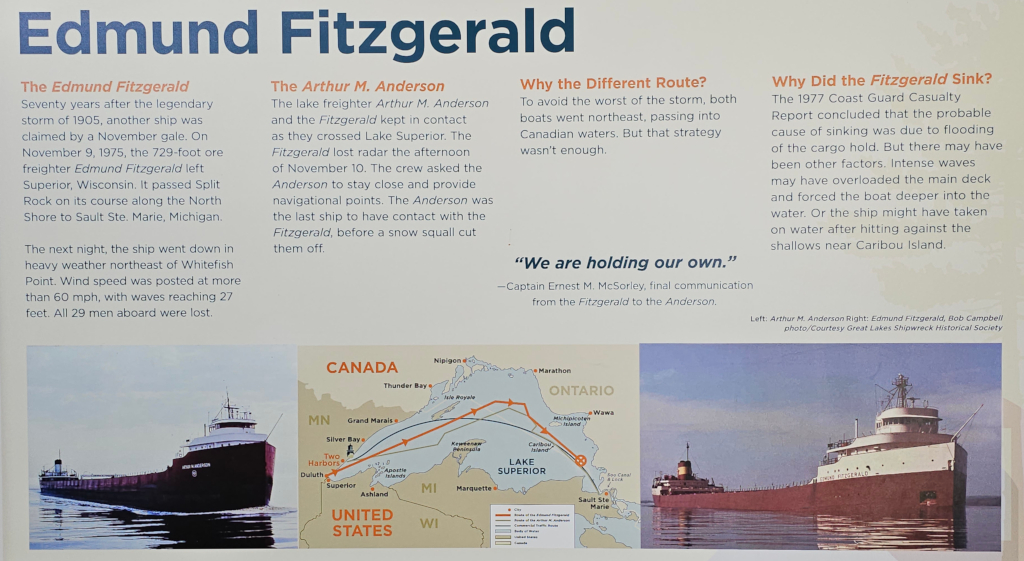
On November 9, 1975, the SS Edmund Fitzgerald departed Superior, Wisconsin, across the harbor from Duluth, loaded with taconite pellets bound for the Detroit area. The 729-foot freighter was among the most famous vessels on the Great Lakes, but that voyage would be its last.
As the ship crossed Lake Superior, a powerful November storm developed. The Fitzgerald and another freighter, the Arthur M. Anderson, encountered worsening conditions. On November 10, the Fitzgerald sank in eastern Lake Superior near Whitefish Bay. All 29 crew members died. No distress call was received.
Investigators examined several possible factors in the sinking, including flooding and the vessel's condition in extreme weather. The National Transportation Safety Board concluded that the probable cause involved sudden flooding of the cargo hold after the collapse of one or more hatch covers. The disaster continues to inspire discussion, research, and remembrance.
An important geographic distinction: the Edmund Fitzgerald did not sink at the Duluth Ship Canal, nor did it depart through the North Pier entrance on its final voyage. It left from the Superior side of the shared harbor. The connection is the wider Duluth–Superior shipping community and the lake that both cities' mariners navigate.
Standing beside the North Pier Lighthouse, watching another freighter head toward open water, gives that history a different weight. Each departure is routine until weather, machinery, or chance makes it otherwise. The lighthouse is one small part of the effort to help sailors come home.
Visiting the North Pier Lighthouse
The lighthouse is at the lakeward end of the north pier, near Canal Park and the Aerial Lift Bridge. The surrounding waterfront is a popular place to walk, take photographs, and watch shipping traffic. Allow roughly an hour for the pier and canal area, or more if you plan to wait for a ship or explore the maritime visitor center.
A few practical tips:
- Watch the weather and waves. Lake Superior can produce dangerous waves that sweep over piers. Never walk onto a wet, icy, wave-washed, or closed pier, and do not approach the edge in rough conditions.
- Bring a layer. Wind off the lake can make the waterfront feel much colder than inland Duluth.
- Check shipping information. Freighter arrivals make a great bonus, but schedules can shift.
- Stay on public routes. The lighthouse is a navigational structure, not a guaranteed open-to-tour interior attraction.
- Explore both directions. Photograph the lighthouse against the lake, then turn around for the view of the canal and Aerial Lift Bridge.
Photographing the Lighthouse and Canal
Early morning and late afternoon light can bring out the texture of the lighthouse and the concrete breakwater. A wider lens is useful for including the canal, bridge, and city skyline; a telephoto lens can isolate a freighter entering the harbor. If a vessel is passing, look for compositions that show its scale against the little white tower.
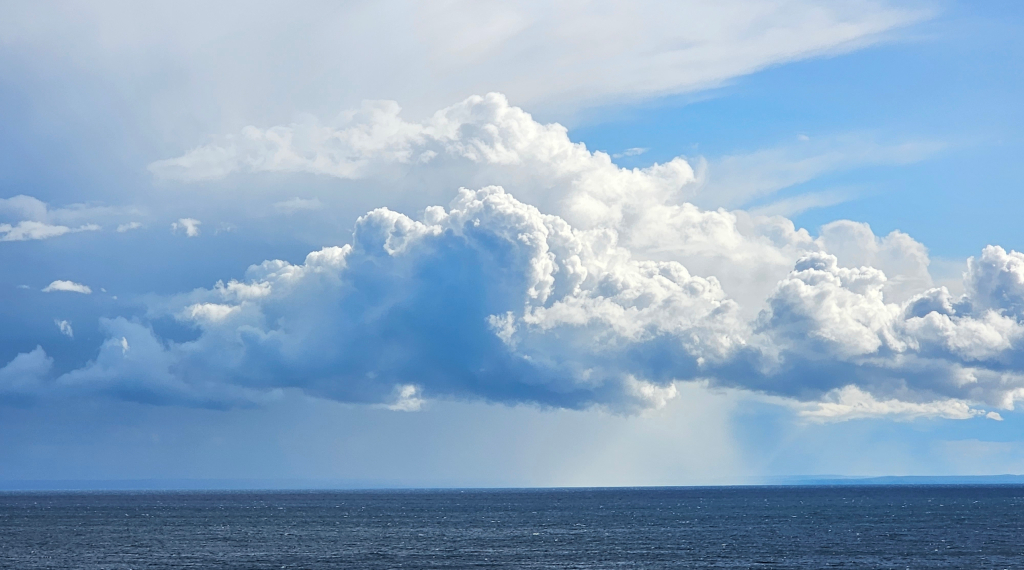
Stormy skies can be dramatic, but no photograph is worth being caught by a breaking wave. Photograph rough weather from a safe, sheltered public viewpoint well away from the pier edge.
A Small Light with a Big Story
Duluth's North Pier Lighthouse is not the tallest or grandest lighthouse on the Great Lakes. That is part of its appeal. It sits at the meeting point of a working harbor and an inland sea, surrounded by stories of ambition, engineering, commerce, and loss.
Visit for the view of Lake Superior. Stay to watch a freighter pass beneath the bridge. And when you look toward the open water, remember the sailors who made these routes possible—and those, including the 29 aboard the Edmund Fitzgerald, who never returned.
Traveling Lens
Want the full-resolution original?
High-resolution photographs and video from our travels will be available for licensed download from Traveling Lens.
Keep Exploring
Related Stories
Laura Ingalls Wilder: On the Banks of Plum Creek in Walnut Grove, MN
Follow Laura Ingalls Wilder to the banks of Plum Creek near Walnut Grove, Minnesota, where the Ingalls family lived in a dugout, …