Minnesota · Walnut Grove, MN
Laura Ingalls Wilder: On the Banks of Plum Creek in Walnut Grove, MN
Follow Laura Ingalls Wilder to the banks of Plum Creek near Walnut Grove, Minnesota, where the Ingalls family lived in a dugout, battled crop failures, and experienced the prairie life that later inspired On the Banks of Plum Creek.
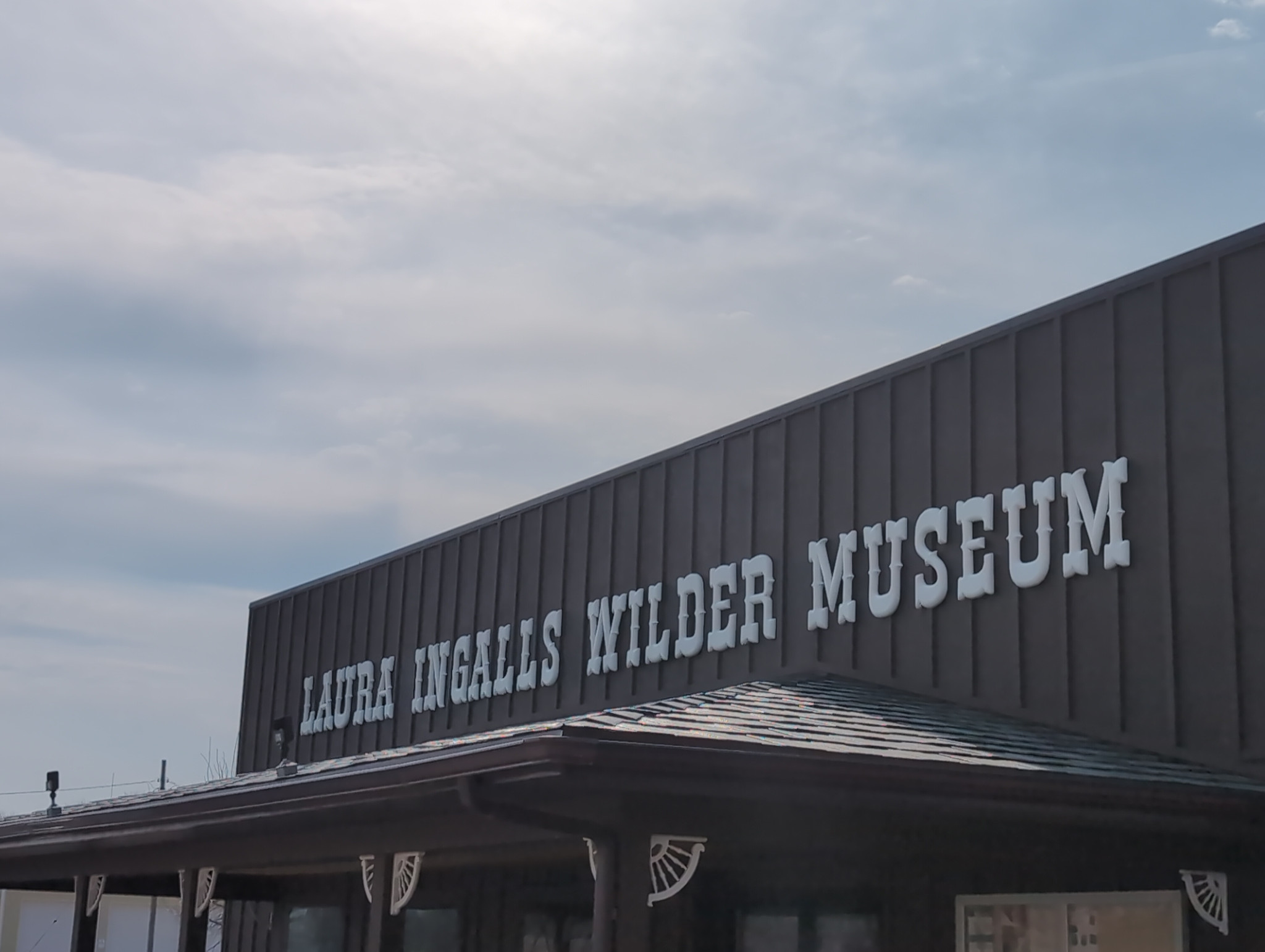
For generations of readers, Walnut Grove, Minnesota, has been one of the places most closely associated with Laura Ingalls Wilder and the Little House stories. Long before Laura became an author, she was a young girl living with her family along the banks of Plum Creek, surrounded by tallgrass prairie, farmland, and a small but growing Minnesota community.
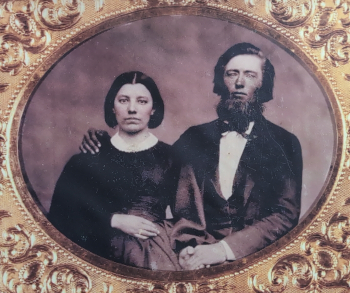
The Ingalls family's years around Walnut Grove would later inspire On the Banks of Plum Creek. Today, visitors can still explore the landscape where Laura lived, visit the site of the family's dugout home, and discover a small Minnesota town that continues to preserve its connection to the Ingalls family.
For anyone following Laura's journey across the American frontier, Walnut Grove is an important stop.
The Ingalls Family Arrives in Minnesota
Charles and Caroline Ingalls brought their family to the Walnut Grove area in 1874, when Laura was seven years old.
The family settled about a mile and a half north of town along Plum Creek, where Charles intended to establish a homestead. Their first home was very different from the log cabins often associated with the Little House story.
It was a dugout built into the bank of Plum Creek.
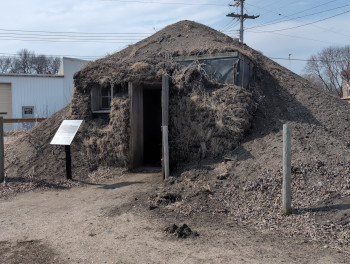
Partially sheltered by the earth itself, the small home became one of the most memorable settings Laura would later describe in On the Banks of Plum Creek.
Eventually, Charles built the family a frame house on the property. Although neither the dugout nor the house survives intact today, the depression marking the dugout site remains visible.
Standing there provides a remarkably direct connection with Laura's childhood.
Life Along Plum Creek
For a young Laura, Plum Creek offered something beyond the work and uncertainty of pioneer life.
It was a place to explore.
The creek wound through a landscape of prairie grasses, plum thickets, springs, and rolling ground. Several features associated with Laura's descriptions can still be recognized around the historic property.
It's easy to understand why the landscape became such an important part of her memories.
The prairie could appear peaceful and endless, but life here demanded constant work. Charles and Caroline were trying to establish a farm while raising their children in an environment where the family's fortunes depended heavily on weather, crops, and circumstances beyond their control.
Those contrasts—freedom and hardship, beauty and uncertainty—became recurring themes in Laura's later stories.
When the Grasshoppers Came
One of the greatest challenges the Ingalls family faced in Minnesota came from something surprisingly small: Grasshoppers.
During the 1870s, enormous grasshopper infestations devastated farms across parts of the Great Plains and Upper Midwest. The Ingalls family was among the many settlers affected.
Crops that represented months of work and the promise of income could disappear.
For a family trying to establish a farm, repeated crop losses were devastating. The Walnut Grove historical record indicates that after several unsuccessful crops, Charles Ingalls ultimately chose not to complete the homestead process on the Plum Creek property.
The grasshopper years became another experience Laura incorporated into On the Banks of Plum Creek.
They also serve as a reminder that the pioneer story wasn't simply about moving west and claiming land. Success was never guaranteed.
Weather, insects, illness, debt, isolation, and crop failure could quickly change a family's plans.
Leaving—and Returning—to Walnut Grove
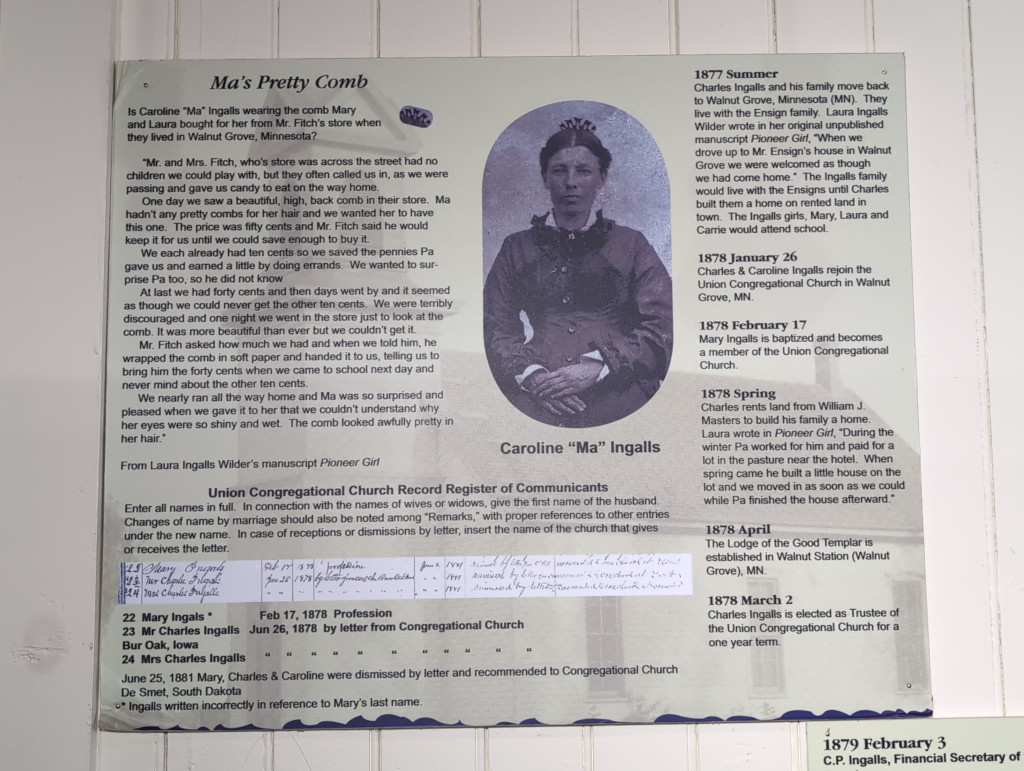
The Ingalls family's actual movements were somewhat more complicated than the streamlined story presented in the Little House books.
After leaving the Walnut Grove area in 1876, the family moved to Burr Oak, Iowa, where Charles and Caroline helped operate a hotel.
The family later returned to Walnut Grove.
By 1878, they were once again living in the community. Charles worked in town and served as a justice of the peace. Laura, Mary, and Carrie attended school there.
Their second stay would not last long.
In 1879, Charles accepted work connected with the railroad pushing farther west. The family soon followed him into Dakota Territory, beginning the next major chapter of Laura's life near what would become De Smet.
That transition connects two of the most interesting places on a modern Laura Ingalls Wilder journey: Walnut Grove, Minnesota, and De Smet, South Dakota.
The Real Walnut Grove and the Television Town
For many people, the name Walnut Grove immediately brings to mind the television series Little House on the Prairie.
The real Walnut Grove is different.
The television series used Laura's books and characters as inspiration, but its Walnut Grove was created for television and filmed primarily in California.
The Minnesota town, however, is the place where the real Ingalls family lived.
That distinction makes visiting Walnut Grove particularly interesting. Instead of visiting a television set, you're exploring the actual countryside connected with Laura's childhood.
The real Plum Creek still flows through the landscape.
The real town still sits nearby.
And the history behind Laura's stories remains part of the community.
Visiting the Ingalls Dugout Site
One of the most meaningful places to visit is the Ingalls Dugout Site north of Walnut Grove.
The property remains privately owned, but visitors are permitted access during its operating season. A depression in the creek bank marks the location associated with the family's dugout.
Don't expect a reconstructed pioneer village.
That's part of what makes the site interesting.
The surrounding landscape does much of the storytelling.
Walk toward Plum Creek and look across the prairie. Imagine arriving here by wagon in 1874 with your possessions, children, livestock, and the expectation that this patch of Minnesota prairie might become your family's permanent home.
For readers of On the Banks of Plum Creek, familiar descriptions suddenly have geography attached to them.
Exploring Laura's Walnut Grove
The Laura Ingalls Wilder Museum in Walnut Grove provides another place to explore the history of Laura, the Ingalls family, and the surrounding community.
The museum complex includes several exhibit buildings and collections related to pioneer life, Laura's history, and the later television series.
Around town, several locations are connected with the Ingalls family's years in Walnut Grove.
The sites of the school attended by Mary, Laura, and Carrie and the Congregational church attended by the family have been identified, although those locations are now private property and aren't open for touring.
The historic Masters Store & Hall also has an Ingalls connection. Charles Ingalls helped construct the building, and Laura later worked there.
Another surviving connection is Pa's bell, now located at English Lutheran Church in Walnut Grove.
Individually, these places may seem modest.
Together, they help reconstruct the community the Ingalls family knew.
The Wilder Pageant
During summer, Walnut Grove's connection with Laura takes on another dimension with the Wilder Pageant.
Performed outdoors near Plum Creek, the production tells stories inspired by Laura's experiences and the history of the Walnut Grove community.
Watching Laura's story performed outdoors on the Minnesota prairie adds something that can't easily be recreated inside a museum.
The landscape becomes part of the stage.
Visitors planning a summer trip should check the current performance schedule before traveling, since the pageant is held only on selected dates.
Following Laura From Walnut Grove to De Smet
Walnut Grove becomes even more interesting when viewed as one chapter in a much larger journey.
Laura's childhood took her through Wisconsin, Kansas, Minnesota, Iowa, and Dakota Territory. Each place contributed experiences that would eventually become part of the Little House books.
Walnut Grove represents Laura as a child exploring Plum Creek and watching her parents struggle to establish a farm.
De Smet represents a different Laura.
There she attended school, became a teacher, met Almanzo Wilder, and eventually married.
Visiting both places provides a much richer understanding of her life than either destination can offer alone.
History, Memory, and the Little House Books
It's worth remembering that Laura's books aren't diaries.
They are works of historical fiction based on her memories and family experiences. Events were sometimes rearranged, omitted, simplified, or changed as Laura transformed her life into stories for young readers.
That doesn't make Walnut Grove less significant.
In some ways, it makes visiting the actual places even more interesting.
The landscape allows you to compare the world of the books with the geography and historical record behind them.
You begin to see where memory ends, storytelling begins, and the two come together.
Finding the Little House Landscape
Walnut Grove doesn't require skyscrapers, amusement parks, or elaborate attractions to make it worth visiting.
Its appeal is quieter.
It's found beside a creek.
It's in the remains of a dugout carved into an earthen bank.
It's along country roads crossing fields that stretch toward the horizon.
And it's in a small Minnesota town that continues to remember a girl who lived there more than 150 years ago.
For travelers who grew up with the Little House books, visiting Walnut Grove offers something special: the opportunity to leave the fictional prairie behind for a while and explore the real landscape that helped inspire it.
Traveling Lens
Want the full-resolution original?
High-resolution photographs and video from our travels will be available for licensed download from Traveling Lens.
Gear Used
What we brought
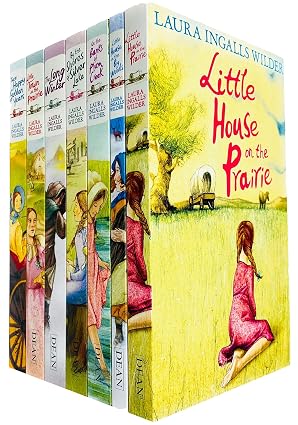
Little House on the Prairie Series 7 Books Collection by Laura Ingalls Wilder
Paperback
View on Amazon →Keep Exploring
Related Stories
Laura Ingalls Wilder: Finding the Little Town on the Prairie in De Smet, SD
Walk in the footsteps of Laura Ingalls Wilder in De Smet, South Dakota, where the open prairie, historic buildings, and stories of …
Duluth's North Pier Lighthouse: Where Lake Superior Meets the Harbor
Walk Duluth's North Pier to discover a century-old lighthouse, watch Great Lakes freighters pass beneath the Aerial Lift Bridge, and explore the …